Concrete cutting contractors in Skagit County, WA handle everything from a single trench cut for a new water line to full slab removal ahead of a driveway rebuild. Homeowners, general contractors, and utility crews all lean on the same three methods: flat sawing, wall sawing, and core drilling. Picking the wrong contractor, or skipping a permit check, turns a one-day cut into a two-week delay.
We coordinate concrete cutting subcontractors on foundation and remodel jobs across Mount Vernon, Burlington, and Anacortes as part of our general contracting work, and the projects that go smoothly all have one thing in common: the cutting crew scouted the slab, checked for rebar and utility lines, and scheduled around the wet season before anyone fired up a saw.
Types of Concrete Cutting Services
Not every job calls for the same equipment. Concrete cutting contractors choose between slab sawing, wall sawing, and core drilling based on the surface, thickness, and purpose of the cut.
Slab Sawing (Flat Sawing)
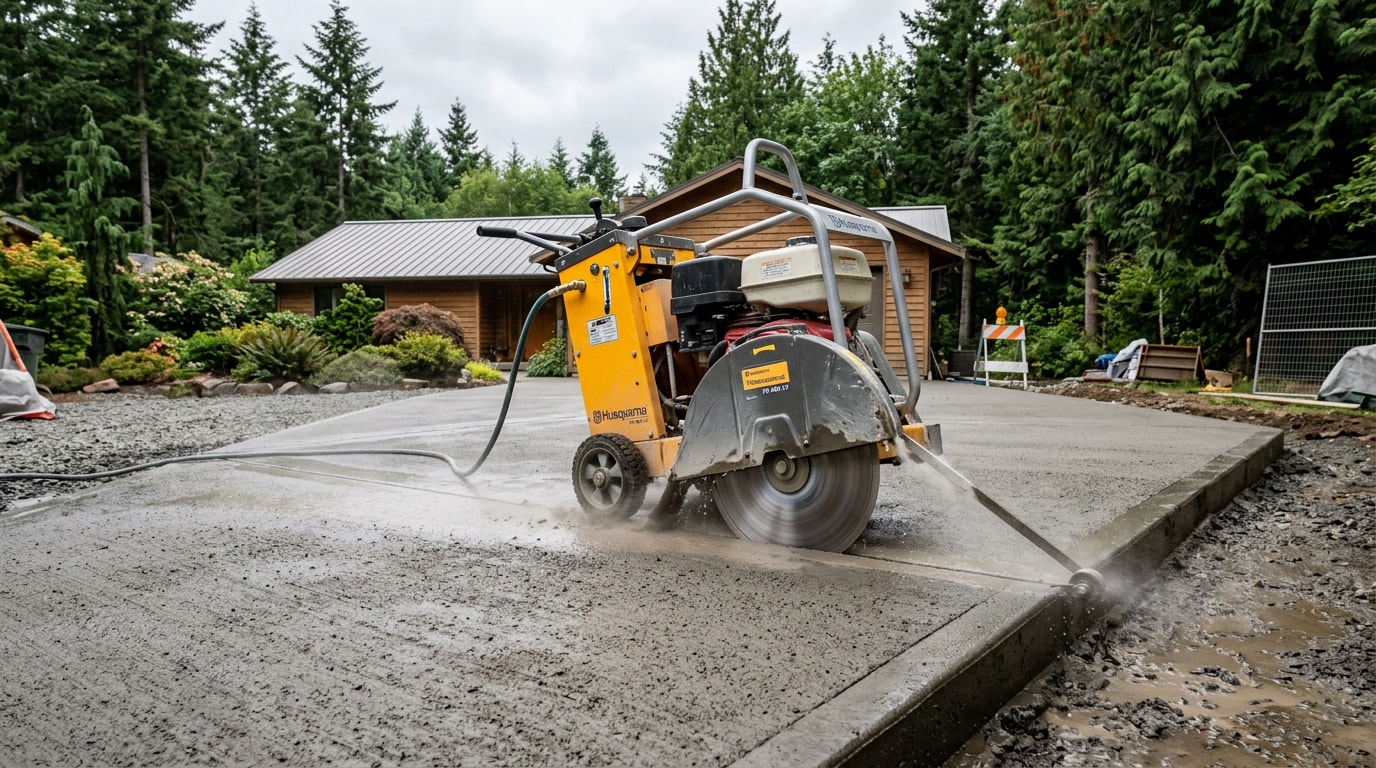
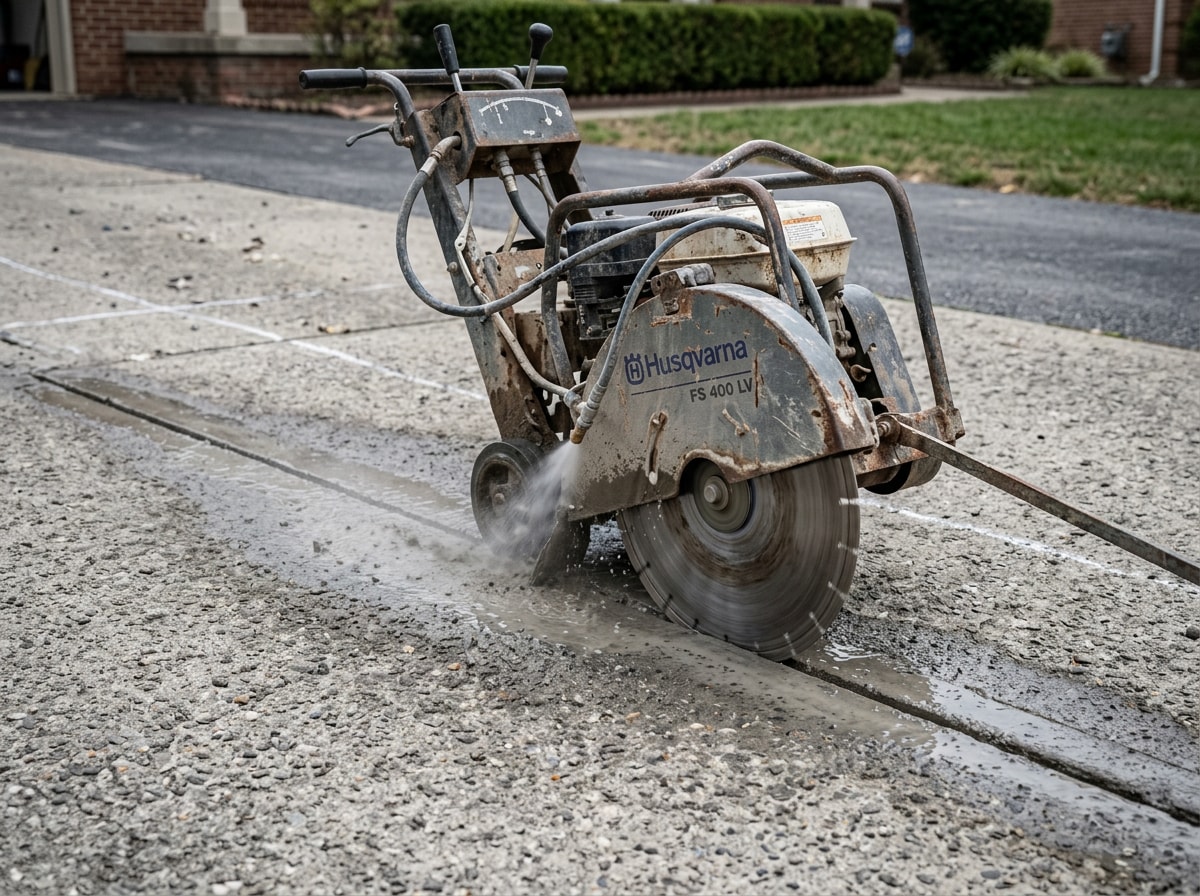
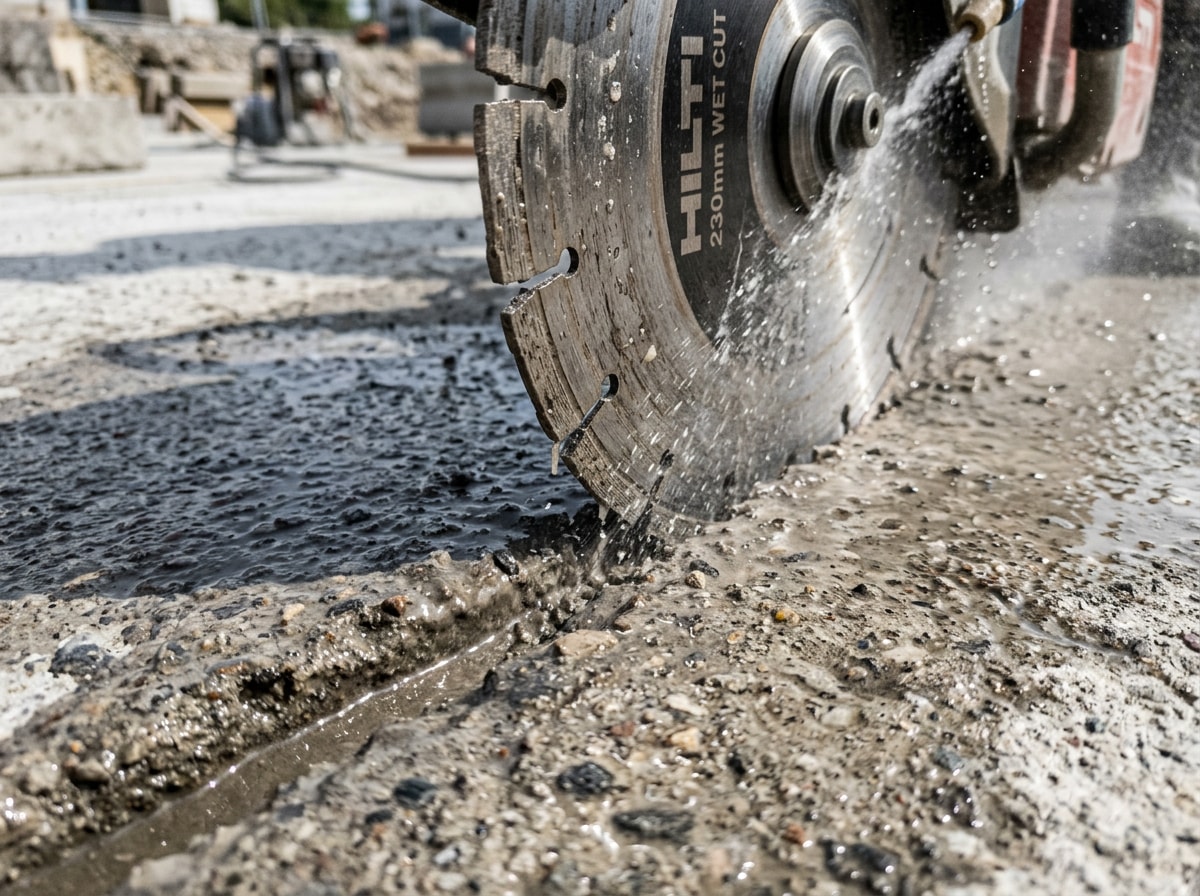
Slab sawing, or flat sawing, cuts horizontal surfaces like driveways, floors, and sidewalks using walk-behind saws with diamond blades. It's the standard method for driveway replacement, expansion joints, and trenching prep. Concrete grinding often follows to smooth edges or level slabs before new flooring or coatings go down. If your project ends with a new driveway pour, our driveway concrete team can pick up right where the cutting crew leaves off.
Wall Sawing
Wall sawing makes vertical or angled cuts in standing walls, most often for door and window openings, HVAC penetrations, or structural changes. Precision wall saws run on a track system that keeps the blade steady, reducing vibration and cracking, which matters on occupied buildings.
Core Drilling
Core drilling bores round holes through concrete, brick, or stone for utility penetrations, plumbing, electrical conduit, and anchor bolts. Bits range from about one inch to several feet in diameter. Because the bit removes a clean cylindrical core, concrete coring leaves a smooth opening with minimal stress on nearby concrete.
What Concrete Cutting Typically Costs
Pricing depends on the method, slab thickness, rebar, and how easy the crew can get equipment to the cut line. Use this as a starting point for conversations with contractors, not a quote.
| Method | Common Pricing Basis | Typical Use | Main Cost Drivers |
|---|---|---|---|
| Slab sawing (flat sawing) | Per linear foot | Driveways, floors, trenching prep | Slab thickness, rebar density, access |
| Wall sawing | Per linear foot (higher rate) | Door/window openings, HVAC penetrations | Wall thickness, track setup, occupied-space precautions |
| Core drilling | Per hole or per inch of diameter | Utility penetrations, anchor bolts, plumbing | Bit diameter, material (concrete vs. brick/stone), depth |
Get a firm number by sending photos and dimensions through our contact page rather than estimating from a per-foot average alone.
Benefits of Professional Concrete Cutting
Professional concrete cutting delivers clean cut lines and reduced cracking in adjacent concrete. It also means controlled dust and slurry that protect both the job site and nearby stormwater drains.
- Clean, straight cuts that reduce cracking and spalling in adjacent concrete
- Wet-cutting methods that control slurry and keep debris out of storm drains
- Lower risk of hitting rebar or embedded utilities blind
- Reduced airborne dust exposure for crews and anyone working nearby
Dust control isn't optional on a job site. Respirable crystalline silica is created when cutting, sawing, grinding, drilling, and crushing stone, rock, concrete, brick, block, and mortar , and OSHA's construction standard requires employers to limit worker exposure to it. Any contractor you hire should be able to explain how they control dust on OSHA's respirable crystalline silica page, not just promise it verbally.
Before You Hire a Concrete Cutting Contractor in Skagit County
Not all concrete cutting contractors bring the same experience. Before signing anything, check these four items:
- Active WA state contractor license and current liability insurance.
- Project history similar to yours, driveway, foundation, utility trench, or interior demo.
- Dust and slurry control plan for the specific cut location.
- Scheduling flexibility for Skagit County's wet season.
Review a contractor's concrete contractor services list to confirm they handle your scope before you request a bid.
Weather Considerations in Western Washington
Skagit Valley's wet season can delay outdoor cutting and complicate slurry runoff control. Western Washington's wettest stretch typically runs through December and January, when precipitation is frequently recorded on 20 to 25 days or more each month , according to the Western Regional Climate Center. That pushes a lot of outdoor cutting demand into the drier summer months, so booking early for a spring project is worth doing.
Public Works & Commercial Experience
Contractors with public works concrete cutting experience have typically passed bonding and licensing requirements and worked under tighter inspection standards than residential-only crews. For projects involving schools, municipal buildings, or utility easements, commercial concrete cutting experience usually means smoother permitting and inspections. If your scope includes a tenant improvement or a new slab, our concrete foundations and concrete flatwork pages outline what comes after the cut.
Do You Need a Permit for Concrete Cutting in Skagit County?
Permit requirements depend on scope and location. Skagit County Planning & Development Services issues permits only for projects that are in unincorporated Skagit County outside of any of the cities (Anacortes, Burlington, Mount Vernon, and Sedro-Woolley) and towns (Concrete, La Conner, Lyman, and Hamilton) . If your job is inside one of those cities, you'll go through that city's own building department instead of the county.
Structural cuts, driveway approach changes, and new-construction work usually require a permit. A building permit is required once you have land use approval, although some types of work are exempt from building permits . Minor patio or interior cuts may fall under an exemption, but confirm it before scheduling, since exempt work still has to meet code. Check current rules on the Skagit County building permit page before you book a crew.
Locations We Service for Concrete Cutting
Concrete cutting contractors serving Skagit County, WA typically cover Mount Vernon, Burlington, Anacortes, Sedro-Woolley, La Conner, and the town of Concrete. Mount Vernon and Burlington see frequent commercial work, while Anacortes projects often involve marine facilities. See our full Skagit County, WA service area to confirm coverage, or browse our homepage for the rest of our concrete and construction services. For a deeper look at pricing and permitting across the broader concrete scope, our guide on concrete contracting in Skagit County covers pouring and finishing in more detail.
Ready to get cutting scheduled before the wet season backs up the calendar? Request a quote and we'll walk the scope with you.
FAQ
How many concrete cutting contractors are near Skagit County?
Skagit County has a modest pool of licensed concrete cutting contractors, ranging from specialized sawing companies to general contractors who offer cutting as an add-on service. Confirm active licensing and current capacity directly with any contractor before you commit to a date.
Does a concrete cutting project need a permit in Skagit County?
It depends on scope and location. Structural cuts, driveway approach changes, and new-construction work usually need a permit, and whether you apply through the county or a city depends on where the property sits. Minor patio or interior cuts may be exempt, but confirm it with Skagit County Planning & Development Services or your local city building department first.
What tools are used for concrete cutting?
Concrete cutting contractors rely on diamond-blade slab saws, wall saws, core drills, and handheld cutters. Blade and bit choice depends on concrete thickness, reinforcement, and cut type. Diamond blades cut cleanly through rebar-reinforced concrete, reducing chipping and blade wear.
How much does concrete cutting cost?
Costs vary by method. Flat sawing is commonly priced per linear foot, wall sawing costs more due to equipment and track setup, and core drilling is typically priced per hole or per inch of diameter. Slab thickness, embedded rebar, and site access drive most of the price difference between quotes.
What's the difference between concrete cutting and concrete demolition?
Concrete cutting makes precise, controlled lines using diamond blades or core bits, leaving clean edges and minimal disturbance to surrounding material. Demolition breaks concrete apart with hammers, breakers, or excavator attachments, which is faster but leaves rough edges and more debris. Cutting is the right call when you need a clean opening or are preserving the surrounding slab.
Can a homeowner rent equipment and cut concrete themselves?
Rental slab saws and handheld cutters are available, but hitting rebar, electrical conduit, or plumbing blind is a real risk without locating the slab first. Professional crews also manage silica dust exposure and wet-cutting slurry, both of which carry safety and cleanup requirements that are easy to underestimate on a first attempt.