
Piling contractors in Skagit County, WA face a soil puzzle most crews never see: saturated delta farmland, tidal flats, and Puget Sound shoreline, sometimes all within a few miles of each other. Hire the wrong crew and you find out about that mismatch after the hammer has already started driving. This guide breaks down the five checks that separate a contractor who understands local ground from one who's guessing.
Visit Sherman General Contracting LLC to see our services and request a free estimate.
The 5-Point Checklist Before You Hire
We coordinate site prep and foundation work across Skagit County on a regular basis, and the projects that run smoothly almost always have one thing in common: the piling sub was vetted before the soil report came back, not after. Use this list to screen anyone on your bid sheet.
- Proven experience in conditions like yours. Delta, tidal, or upland, not just "Washington State" generally.
- Equipment matched to your soil. Hydraulic hammer, diesel hammer, vibratory driver, or helical screw, chosen for a reason.
- Verifiable licensing and insurance. An active Washington contractor registration, not a verbal promise.
- A track record you can confirm. References you actually call, not just a logo list.
- A real, documented safety program. Daily inspections, fall protection, and OSHA/WISHA compliance in writing.
The sections below walk through each one in detail.
Check Experience and Expertise
Ask any candidate a few direct questions. How many years have they worked in pile driving? Have they handled projects at your scale? Do they specialize in steel, concrete, or timber piles, or all three? An experienced pile driving contractor should answer without hesitation and tie the answer back to your specific site.
Years in business only tells part of the story. What matters more is whether a contractor understands Skagit County soil conditions at a granular level.
A crew working near Mount Vernon's agricultural flats deals with soft, saturated delta soils that often require deeper piles or specialized bearing capacity testing. A crew working near Anacortes or La Conner faces marine and tidal conditions: corrosion-resistant materials, tidal work windows, and salt-saturated ground that behaves nothing like inland soil.
Ask candidates to describe how their experience applies to your exact sub-area, not just the county in general. A contractor who can only speak in generalities about "local conditions" probably hasn't worked both environments. If your project also involves clearing, grading, or pad prep before piles go in, our site preparation services team can walk the lot with you and flag soil issues early.
Verify Licenses and Certifications
In Washington, pile driving contractors must carry a valid contractor registration through the state, hold adequate liability insurance, and follow OSHA construction standards on every jobsite. Don't take a verbal assurance at face value.
Every registered contractor in Washington is issued a unique L&I contractor registration number, and state law requires contractors to include their registration number in all advertising. If a contractor cannot or will not provide a registration number, treat that as a serious red flag. You can confirm license status, bond coverage, and any violation history directly through Washington's L&I contractor verification tool, a five-minute check before you sign anything.
Working with an insured piling company also protects you financially. If equipment damages a neighboring structure or a worker is injured on-site, proper insurance determines whether that cost lands on the contractor or on you.
Evaluate Equipment and Technology
A reputable contractor maintains its pile driving equipment well, has access to more than one driving method, and can explain why a given method fits your soil and structure rather than defaulting to whatever rig is parked in the yard that week. Ask what equipment they'd bring to your job and why.
The method matters as much as the machine:
- Hydraulic hammer. Controlled, quieter driving. Preferred near residential neighborhoods or sensitive waterways.
- Vibratory hammer. Faster in loose or sandy soils, but not always suitable for dense or mixed strata.
- Diesel hammer. Powerful and widely available, but noisier and less precise than hydraulic options.
- Helical/screw pile. Fast installation with minimal vibration, best suited to lighter structures or tighter sites.
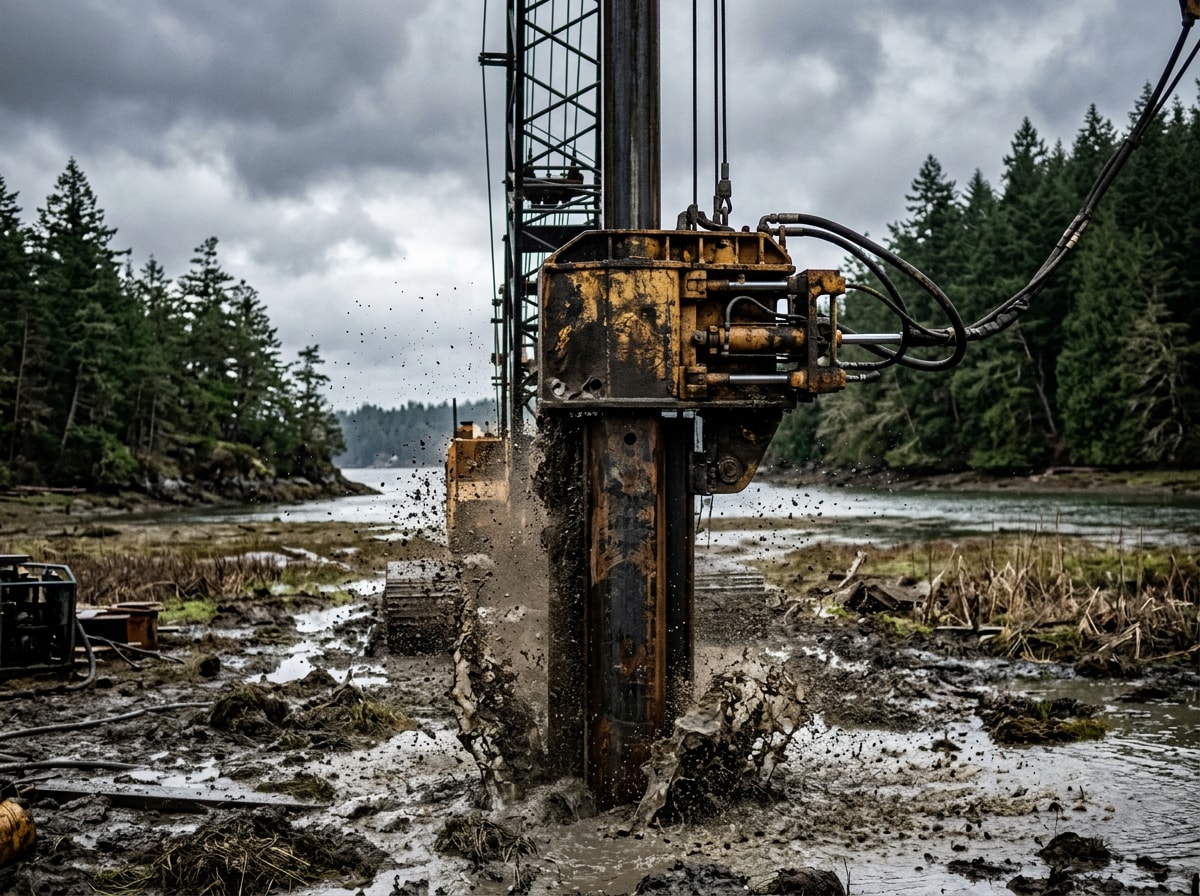
Skagit County's salmon-bearing waterways add another layer most inland hiring guides never mention. Washington law requires people planning hydraulic projects in or near state waters to get a Hydraulic Project Approval from the Washington Department of Fish and Wildlife , and that approval typically limits in-water pile driving to specific seasonal windows. Contractors working near the Skagit River or Puget Sound shoreline should already be fluent in this process. You can read the agency's own overview on the WDFW Hydraulic Project Approval page if you want to confirm timing before you commit to a schedule.
For a homeowner or GC, the practical takeaway is simple: if your site sits near neighbors or sensitive shoreline, ask which equipment type the contractor plans to use and why. Noise, vibration, and speed all vary by method, and the right choice depends on soil and surroundings, not just what's sitting in the yard that week.
Review Past Projects and References
A contractor's previous work tells you more than a sales pitch ever will. Ask for a project list, client references, and case studies, ideally from jobs with similar soil conditions or site access challenges to yours.
Don't just collect the list. Call the references.
Ask about timeline accuracy, communication when soil conditions turned out different from what was expected, and whether the finished work held up. Piling references who hesitate to connect you with past clients are telling you something worth noting.
Once piles are set and load-tested, the next step is usually a footing or slab. If that's part of your scope, our concrete foundation services page covers how we handle that transition on Skagit County builds, and our recent guide to concrete contracting in Skagit County covers permitting and pricing for the pour that typically follows pile work.
Safety Protocols in Pile Driving
Pile driving is heavy industrial work, and a strong safety record isn't optional, it's a baseline requirement. Ask candidates directly about their jobsite safety standards and recent incident history before discussing price.
Compliance in Washington runs through two layers: the state's pile driving equipment rule and federal OSHA construction standards. Washington's pile driving equipment rule requires overhead protection that won't obscure the operator's vision, stop blocks to prevent the hammer from striking the head block, and a visual inspection of all working equipment at the beginning of each shift. Fixed leads must also include ladders and attachment points so workers can engage full body harness lanyards. That's not boilerplate; it's the floor, and it's worth asking a contractor to show you how they document it day to day.
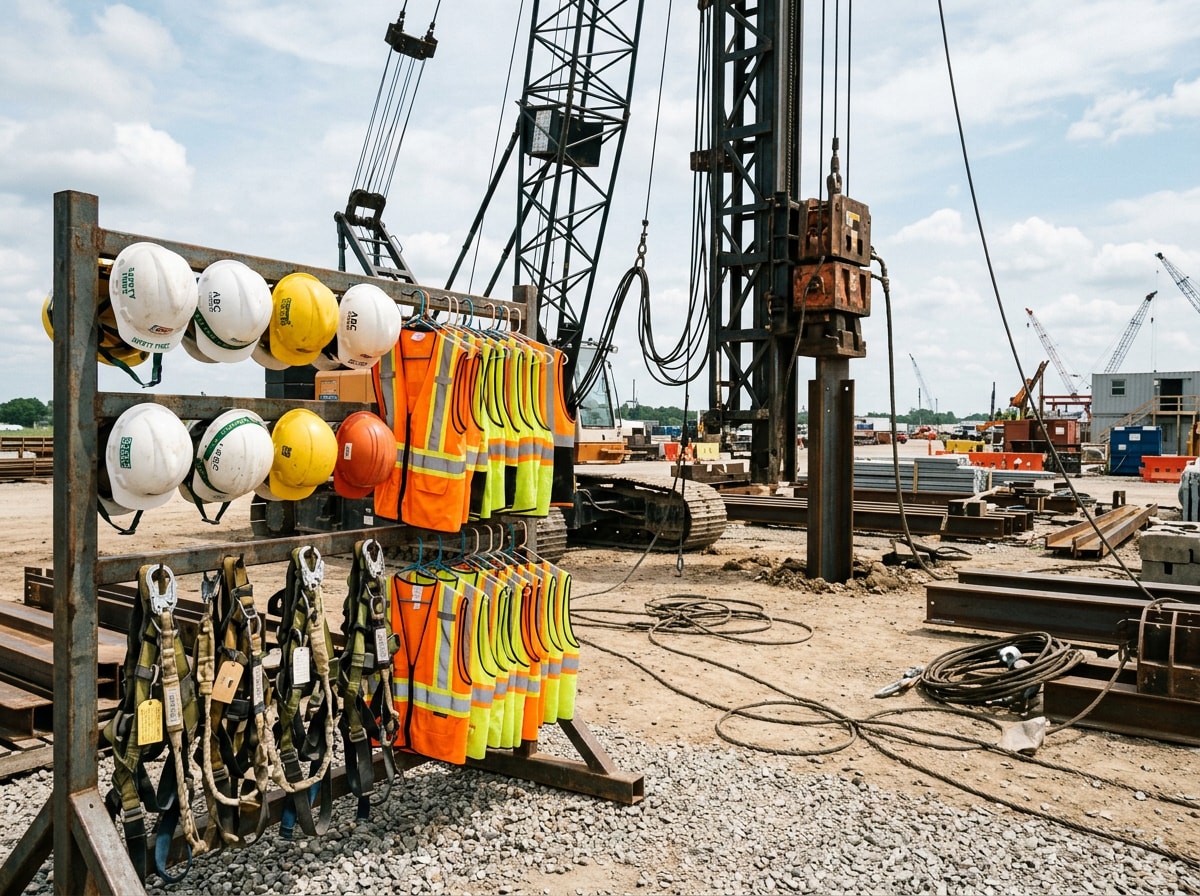
In plain terms: ask prospective contractors whether they document daily equipment inspections, use proper fall protection on pile leads, and follow hearing and noise protocols for crews working near active hammers. A contractor who answers these questions specifically, rather than vaguely, is usually the safer bet.
Choosing Your Pile Driving Partner
Pull the checklist together before you sign anything. Look for a contractor with a track record in Skagit County or similar Washington conditions, a portfolio matching or exceeding your project's scope, and references you've actually contacted.
Responsiveness matters more than people expect. A contractor who takes time to understand your site's soil, access, and timeline constraints before quoting is usually the one who delivers fewer surprises mid-project.
If you're planning a build anywhere in the county, from Mount Vernon to Anacortes to La Conner, check our Skagit County service area coverage and request a quote with your site details rather than a vague ask for pricing. The more specifics you share up front, soil type, access, timeline, the faster any contractor can give you a number you can actually trust.
FAQ
What Is a Pile in Construction?
A pile is a long structural column, typically steel, concrete, or timber, driven deep into the ground to transfer a building's load down to stable, load-bearing soil or rock. Pile foundations support structures where surface soil alone can't carry the weight safely, which is common across much of Skagit County's soft, water-saturated ground.
How Much Do Piling Services Cost?
Pricing varies widely by pile type, depth, soil conditions, and site access, so treat any number here as a starting point for conversation, not a quote.
| Pile Type | General Range (per pile) | Notes |
|---|---|---|
| Driven steel | $300 to $1,200+ | Varies with length and steel gauge |
| Bored concrete | $500 to $2,000+ | Depth and rebar design drive cost |
| Screw/helical | $150 to $500+ | Fast install, limited by soil type |
| Sheet piling | $300 to $1,000+ | Often priced by linear foot, not per pile |
Skagit County's variable water table and soft delta soils can push projects toward the higher end of these ranges, especially near tidal or river sites. Always get an itemized, site-specific bid rather than relying on general estimates.
How Long Does Pile Driving Take to Complete?
Most residential or small commercial pile driving jobs finish within a few days to two weeks, depending on pile count, site access, and weather. Waterfront or tidal sites often take longer because crews must work around tide schedules and seasonal in-water work windows.
Do I Need a Permit for Pile Driving in Skagit County, WA?
Likely yes, and possibly two permits. You'll typically need a standard county building permit for the foundation work itself. If the work occurs in or near a river, tideland, or wetland, you'll also need a Hydraulic Project Approval from WDFW before driving begins. A contractor familiar with Skagit County should flag both requirements during the bidding stage, not after.
How Is Pile Depth Determined?
Engineers conduct soil consistency tests and sediment analysis at the specific site before driving begins. Piles are then driven down until they reach a dense, load-bearing stratum that meets structural safety requirements. The depth isn't guessed; it's measured and confirmed during installation.