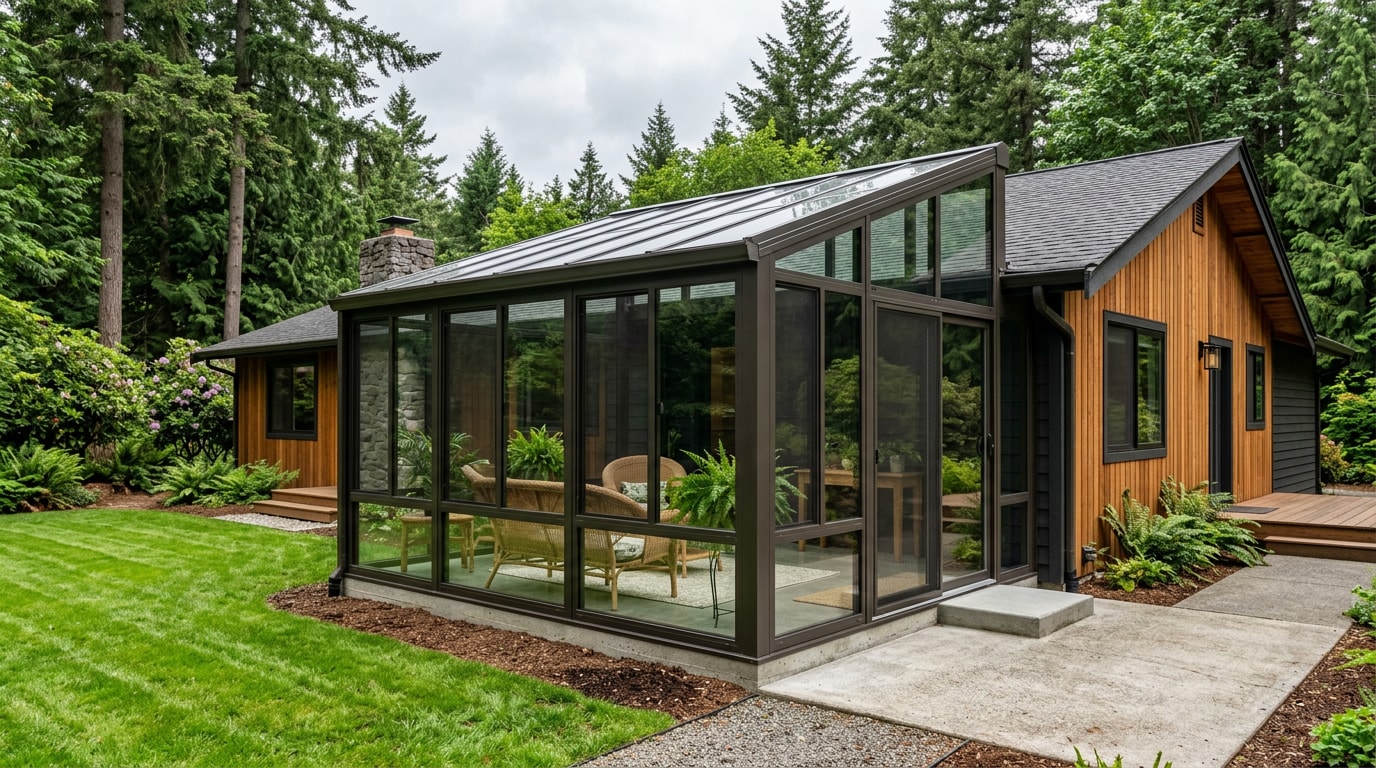
A prefab sunroom in Skagit County, WA typically costs $11,000 to $90,000 depending on size, glazing, and whether the room needs heat and AC to work as living space year-round. Our crews see the same two line items blow up a budget every time: foundation work and glazing upgrades. Here's the real 2026 pricing, the permit rules, and how to keep your number closer to the low end.
Prefab Sunroom Cost in Skagit County, WA: What to Expect in 2026
Most homeowners spend between $20,000 and $90,000 on a finished sunroom project. A basic prefab kit installed on an existing slab can land well under that.
The final number depends almost entirely on three things: size, glazing type, and whether the room needs heating and cooling to function as living space year-round.
That range feels wide because it covers everything from a simple screened-in kit to a fully custom four-season addition with insulated glass and tied-in HVAC.
Typical Sunroom Addition Costs
A prefab sunroom kit with basic installation typically runs $18,000 to $32,000. Fully custom four-season additions can run $45,000 to $90,000 or more once foundation work, electrical, and finish materials are included.
| Project Type | Low | Average | High |
|---|---|---|---|
| Prefab Sunroom Kit (materials only) | $9,500 | $11,050 | $14,000 |
| Basic Sunroom (prefab, installed) | $18,000 | $24,500 | $32,000 |
| Three-Season Sunroom | $22,000 | $32,000 | $45,000 |
| Four-Season Sunroom | $45,000 | $62,000 | $90,000 |
| Custom Design Addition | $55,000 | $85,000 | $165,000 |
Skagit County's labor rates generally run below Seattle and Bellevue metro pricing, which helps offset material costs for many homeowners here. Material prices nationwide have climbed steadily too: input costs for remodelers are up over 51% from Q1 2019 to Q3 2026 according to the National Association of Home Builders, which is one reason locking a quote early in your planning pays off.
What Affects Sunroom Addition Costs
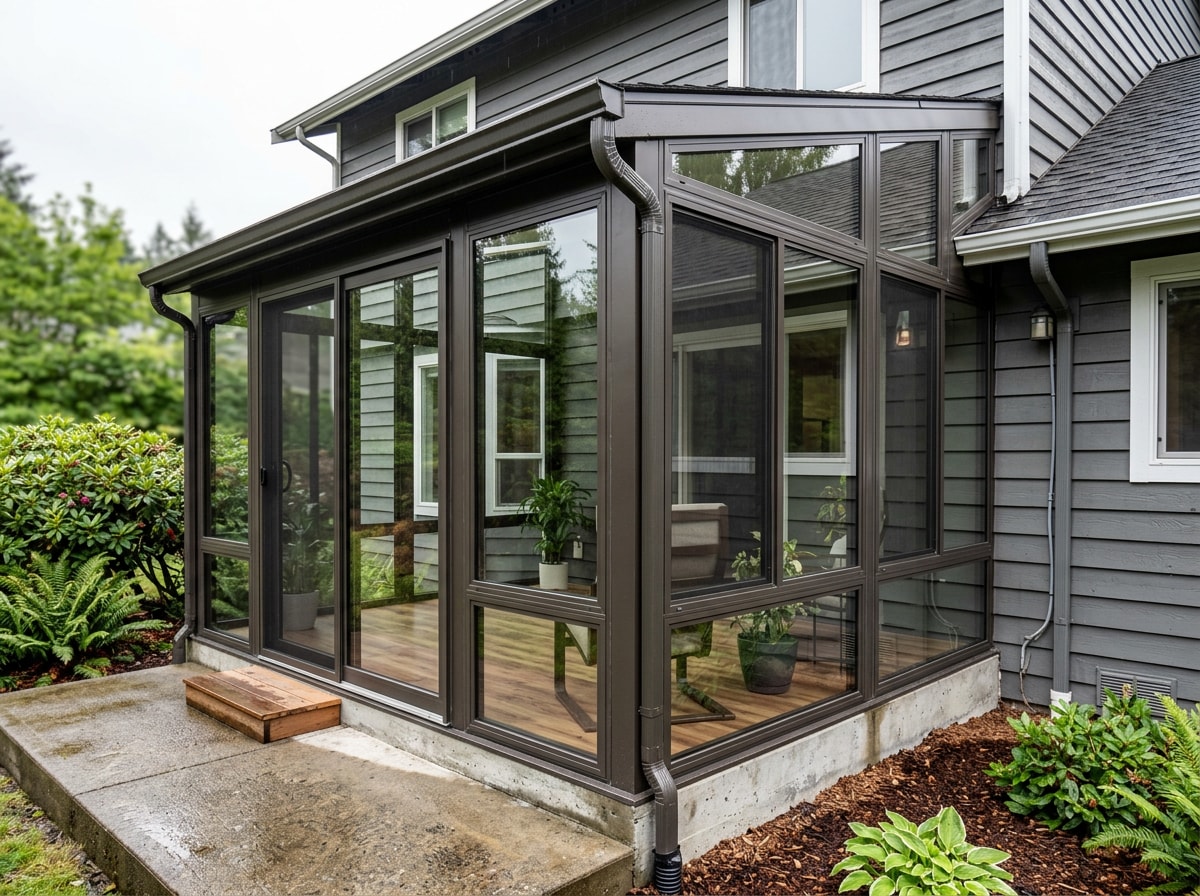
Several variables swing a sunroom addition cost up or down, and it's rarely just one factor. Foundation type, room size, framing material, and how the structure ties into your existing roofline all interact.
- Foundation type. Building on an existing concrete slab or deck is far cheaper than pouring a new footing and foundation, since that eliminates a major excavation and concrete line item.
- Roofline tie-in. Simpler attachment points to your existing roof and siding mean fewer labor hours.
- Room size. Small sunrooms under roughly 150 square feet sit at the low end of the cost tiers above; larger custom rooms push toward the high end.
- Frame material. Aluminum framing is generally the most budget-friendly choice; glass-heavy four-season designs cost noticeably more.
- Glazing package. Standard double-pane glass costs less upfront than high-performance low-E glazing, but the cheaper option can cost you more in heating bills over time.
Skagit Valley's snow load and wind exposure requirements differ by location, and the county maps these by elevation and zone rather than applying one number countywide. Skagit County has different requirements based on the location, and the county map is separated by color and ISO to determine snow load requirements. Foothill properties may need a reinforced sunroom kit built for a heavier design load than a lowland lot a few miles away.
Under the International Residential Code, prescriptive framing is only covered up to 70 pounds per square foot of ground snow load; above that, an engineer has to design the roof . That's worth confirming before you order a kit, not after it arrives.
If your project needs new footings, concrete flatwork and slab prep is usually priced and scheduled separately from the sunroom kit itself. Browse our home addition services to compare foundation options for your site.
Do I Need a Permit for a Sunroom in Skagit County?
Yes. A sunroom that adds enclosed, heated, or structurally attached floor area requires a building permit in Skagit County, whether it's a prefab kit or a fully custom-built room. An addition doesn't qualify for the small-structure exemptions that cover things like unheated sheds under 200 square feet.
Permit review depends on whether your property sits within city limits or unincorporated Skagit County, and larger or structurally significant additions face more scrutiny than small, simple kits. Snow load and wind exposure calculations factor into plan review for properties closer to the foothills.
Because rules and timelines shift by jurisdiction, confirm current requirements directly with Skagit County Planning and Development Services before finalizing a budget or timeline. If you're unsure whether your lot falls under county or city permitting, our Skagit County service area page covers where we build.
Energy Efficiency and Glazing: Don't Skip This Step
A sunroom lives or dies on its glass. Because the walls are mostly glazing, a cheap window package will make the room too hot in July and too cold in January, no matter how good the framing is.
Look for windows that carry the ENERGY STAR label when shopping glazing packages. A standard double-pane window allows approximately 75 percent of the sun's heat into your home, while ENERGY STAR certified windows reduce that heat gain more than typical windows do, without reducing visible light.
For a four-season room in a wet, mild-winter climate like Skagit County's, this isn't a cosmetic upgrade. It's the difference between a room you use in January and one you close off until spring.
How to Keep the Cost Down
A few practical choices can meaningfully lower a sunroom addition cost:
- Build on an existing slab or deck. This is usually the single biggest savings opportunity on the whole project.
- Choose a prefab kit over a fully custom design. This trims both material and labor costs.
- Phase in electrical or HVAC later rather than wiring everything at install.
- Right-size the room to your actual use instead of maximizing square footage, which also keeps permit review simpler.
- Get your glazing spec locked before you order, so you're not paying to swap windows mid-project.
For a ballpark number specific to your property, request a project estimate before committing to a design.
Why Local Experience Matters on a Sunroom Build
A sunroom isn't a standalone box. It has to tie into your existing roof, siding, and foundation correctly, or you end up with leaks and drafts within a year or two. Sherman General Contracting works on home additions, concrete flatwork, and framing across Skagit, Whatcom, Snohomish, and San Juan counties, so the same crew that pours your slab can frame the roof tie-in and close it up tight. If you're also weighing a bigger family room instead of a standalone sunroom, our family room addition guide for Skagit County breaks down that comparison in more detail.
Our general contractor services cover the full scope, from site prep through finish work, if your sunroom project grows into a larger addition partway through planning.
FAQ
How much does a prefab sunroom cost in Skagit County?
A prefab sunroom kit alone typically runs $9,500 to $14,000. A fully installed basic sunroom averages $18,000 to $32,000. The final price depends on size, glazing, and site prep needs.
Do I need a permit for a sunroom in Washington state?
Yes, in nearly all cases. Any heated or structurally attached room addition, prefab or custom, requires a building permit. Confirm the specifics with your local building department before you order materials.
Is a four-season sunroom worth the extra cost?
For Skagit County's wet, mild-winter climate, a four-season sunroom is usually worth it if you want year-round use. A three-season room costs less upfront but sits unused during colder, damp months.
What's the cheapest way to add a sunroom?
The cheapest option is a prefab kit installed on an existing concrete slab or deck. Skipping new foundation work and choosing a basic design cuts costs significantly.
How long does it take to install a sunroom?
Prefab sunroom installation typically takes one to two weeks once permits clear. Custom-built rooms often take four to eight weeks, mostly due to permit review and foundation work.
Can a sunroom be used year-round in the Pacific Northwest?
Only a conditioned four-season room with proper glazing and insulation holds up through a Skagit County winter. Three-season rooms typically close off during the coldest, wettest months.