Hiring the right flat roof contractors in Skagit County, WA matters more than most property owners expect, because a low-slope membrane behaves nothing like a pitched shingle roof once our wet, mild-winter climate gets to work on it. The wrong crew, the wrong drainage plan, or the wrong membrane can turn a routine project into a recurring leak problem within a few years. This guide breaks down installation, replacement, repair, and maintenance, then walks through the material choices and climate factors that actually affect how long a flat roof lasts here.
Flat Roof Installation for New Construction and Additions
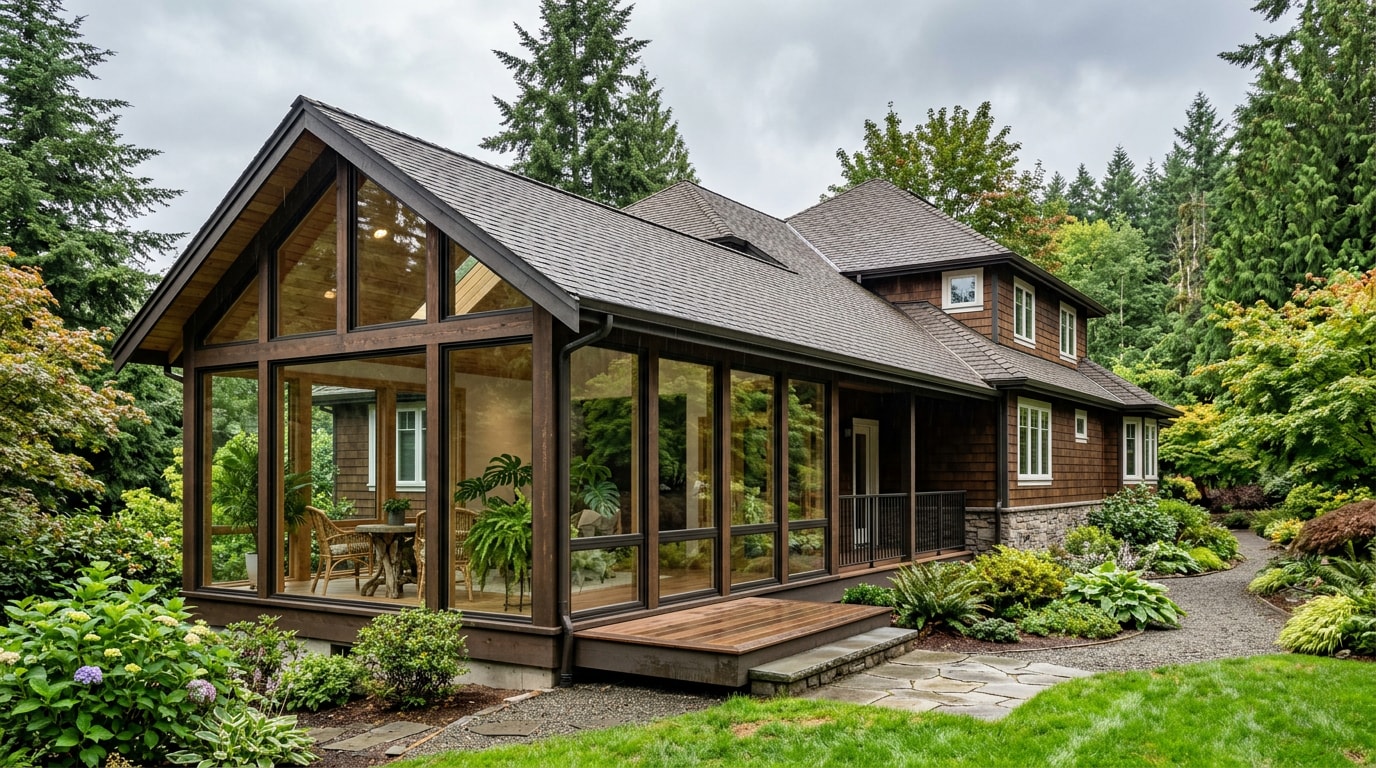
Flat and low-slope roofs show up constantly on home additions, attached garages, accessory dwelling units, and commercial build-outs across Mount Vernon, Burlington, and Sedro-Woolley, not just on warehouses and office buildings. A low-slope design is often the practical choice for a garage conversion, a detached shop, or an ADU where a pitched roofline would clash with the main house or add unnecessary height.
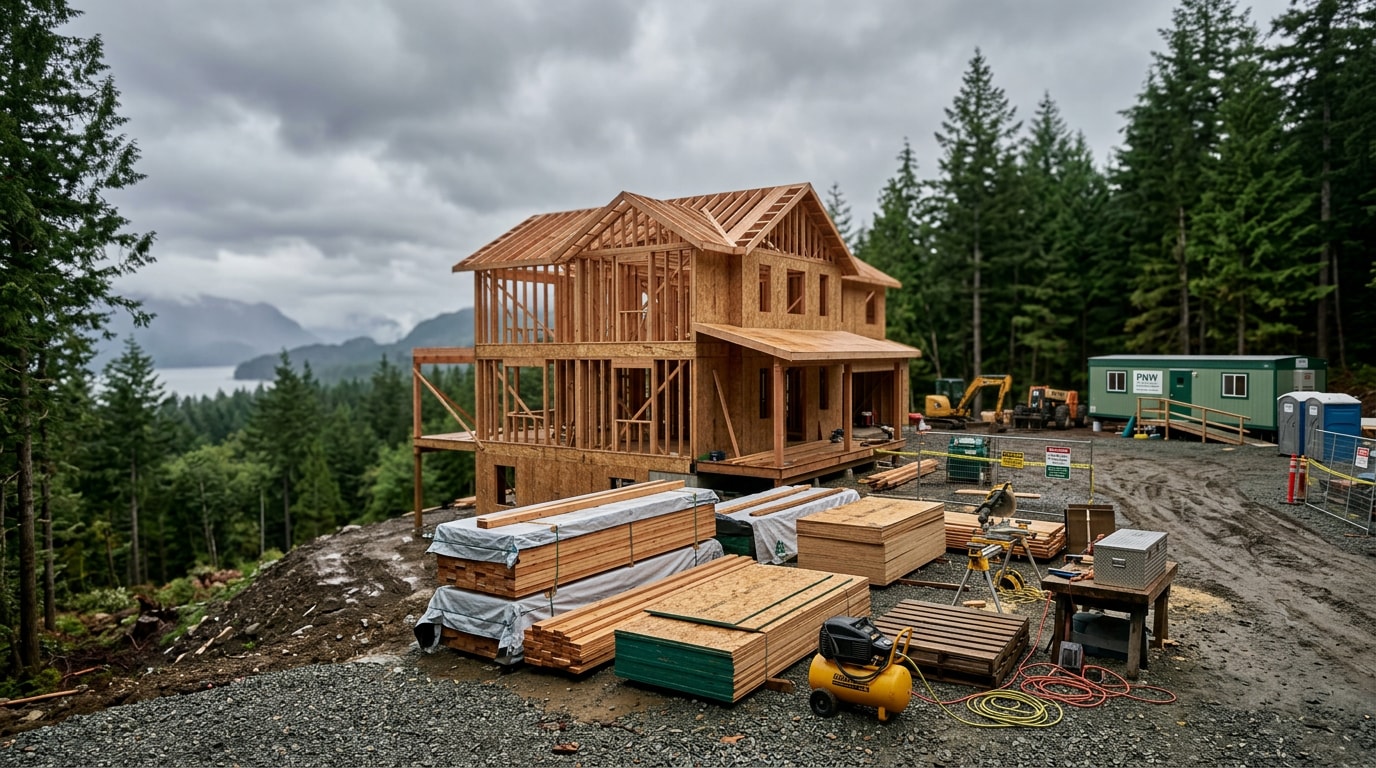
Installation starts with deck inspection, then moves into tapered insulation (to create slope toward drains), membrane installation, and flashing at every penetration, edge, and drain. Each of those steps affects how the finished roof performs during our first heavy November rain, not just how it looks on installation day.
In our project walkthroughs across the county, the single most common surprise on an older building is deck rot hiding under a membrane that looked fine from above. That's why a real inspection before quoting matters more than a quick visual estimate.
Property owners planning a new accessory structure or home addition that will include a flat or low-slope roof section can start with the home additions or ADU construction service pages to see how roof design fits into the overall project scope.
Flat Roof Replacement in Skagit County, WA
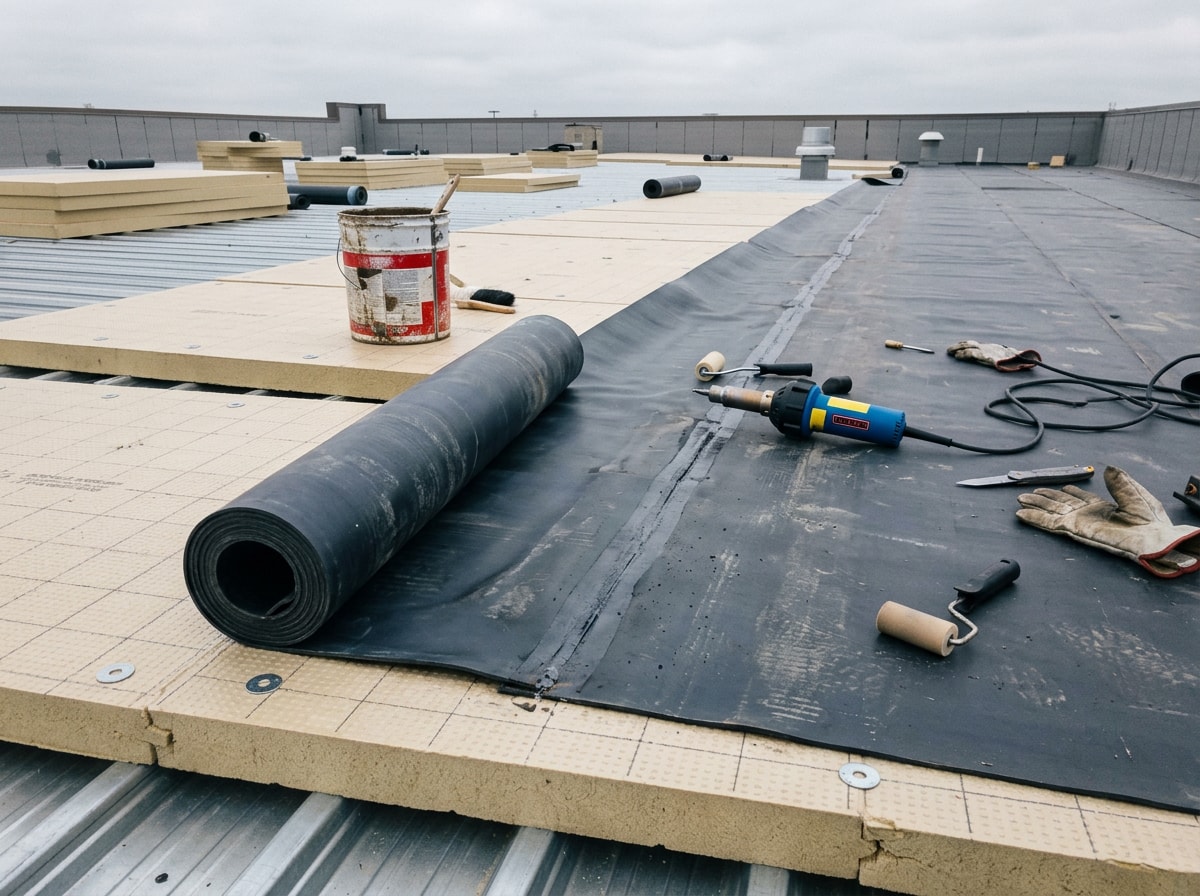
Replacement becomes the right call once leaks keep returning in different spots, seams are failing broadly, or ponding water has become a recurring problem rather than a one-time event after a storm. Patching a roof that's structurally at the end of its service life usually just delays a bigger expense.
For an occupied business or home, scheduling matters as much as material choice:
- Tear-off and new membrane installation are typically phased during the driest stretch of weather available.
- Replacement is the opportunity to correct old drainage mistakes, such as adding tapered insulation or extra drains the original installation lacked.
- Deck condition gets confirmed before new membrane goes down, not after.
A straightforward way to confirm whether repair or full replacement is the smarter move is to request an on-site evaluation. Contact us to schedule one.
Flat Roof Repair and Exterior Structural Issues
Leaks are the most common reason property owners call a contractor outside of a planned project. Flat roof seams, flashing details, and drain penetrations are the usual failure points, and because there's no slope to shed water quickly, even a small gap can let water spread underneath the membrane before it ever shows up as a stain on a ceiling below.
Storm damage (wind-lifted membrane edges, debris punctures, or clogged drains backing up during heavy rain) is the other frequent call type. Property owners dealing with active water intrusion generally want a fast response, with triage first (stopping the leak) and permanent repair second.
When a flat roof leak has already damaged drywall or ceiling finishes, that repair work often extends past the roof itself. Our ceiling contractors guide for Skagit County covers what that interior repair scope typically involves. For the exterior side of the work, see exterior structural repairs.
Ongoing Flat Roof Maintenance for Commercial Properties
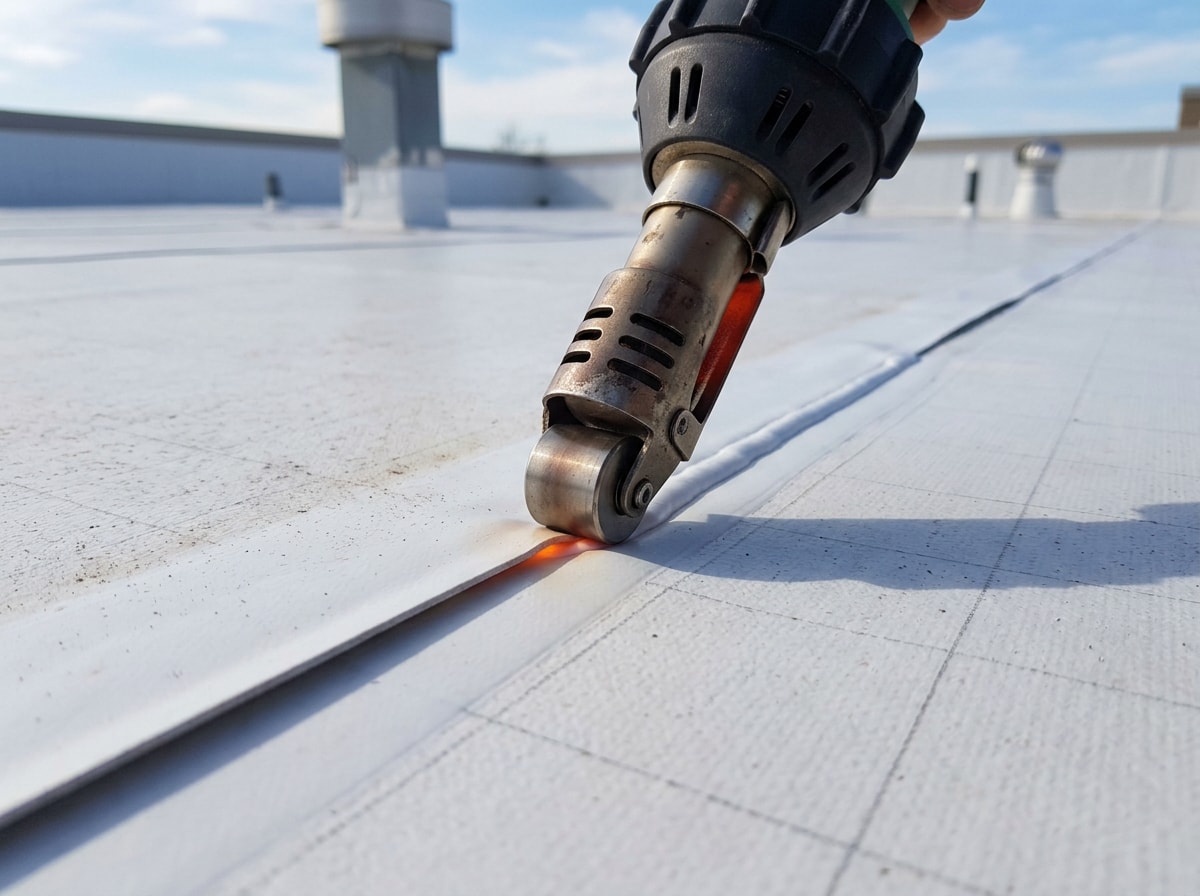
A membrane that's inspected and maintained on a schedule routinely outlasts one that only gets attention after something fails. Twice-yearly walk-throughs catch small issues, like a lifting seam, a clogged scupper, or cracked pitch pockets, while they're still inexpensive to fix.
A documented maintenance program is especially valuable for property owners managing multiple buildings, since it also tends to support manufacturer warranty requirements. Many membrane warranties require evidence of regular inspections to stay valid, which makes a maintenance log part of protecting the investment, not just paperwork.
Property owners managing commercial buildings or multi-tenant spaces can see how a recurring roof inspection fits into a broader upkeep plan on the building maintenance and commercial projects pages.
Flat & Low-Slope Roofing Membrane Types
Flat roofing isn't one product. It's a category of membrane systems with different cost, lifespan, and climate performance profiles, and understanding the main options makes it much easier to have an informed conversation with a contractor before a bid ever comes in.
| Membrane | Approx. 2026 Installed Cost (per sq. ft.) | Typical Lifespan | Cold/Wet Climate Performance |
|---|---|---|---|
| TPO | $6–$9 | 15–25 years | Good; seams can be sensitive to installation quality in cold temps |
| EPDM | $5–$8 | 20–30 years | Excellent; rubber stays flexible in wide temperature swings |
| PVC | $7–$11 | 20–30 years | Excellent; strong chemical and water resistance |
These ranges are general estimates and vary by building size, deck condition, and insulation needs, so treat them as a starting point rather than a quote.
PVC is prized for heat-welded seams that create a continuous, fully waterproof surface rather than relying on adhesives alone, which is a big part of why it holds up well in wetter climates.
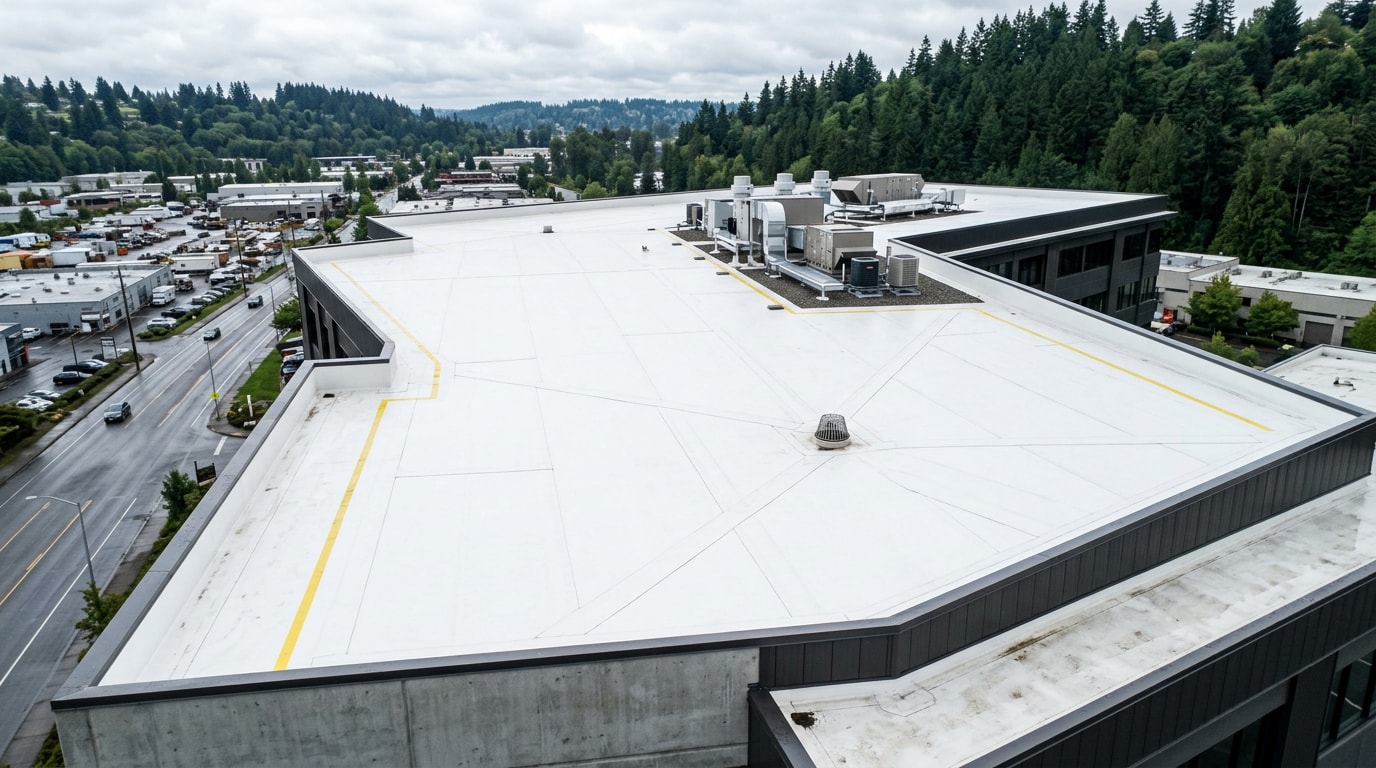
TPO is a single-ply membrane, usually white or light-colored, that reflects more sunlight than darker roofing materials, which can reduce cooling costs in warmer months. Reflective "cool roof" membranes like white TPO are built to meet thresholds set by the EPA's ENERGY STAR Roof Products Program, which requires low-slope reflective roof products to have an initial solar reflectance of at least 65 percent, and a reflectance of at least 50 percent after three years of weathering to qualify as a cool roof. You can review the current ENERGY STAR roof products specification directly from the EPA.
EPDM is a synthetic rubber membrane with a long track record in commercial roofing, valued for flexibility across temperature swings and straightforward repairability. Because localized damage can usually be patched rather than requiring a full section replacement, it tends to generate less roofing waste over its service life than some alternatives.
Rain and Snow: Why Skagit County's Climate Changes the Design
Weather resilience isn't an abstract concern here. Skagit County sees frequent rain through fall and winter, and the foothill areas near Sedro-Woolley and Concrete get occasional heavy, wet snow that behaves differently than drier inland snowfall. Both factors should influence how a flat roof is designed, not just what membrane sits on top.
Rain and Drainage
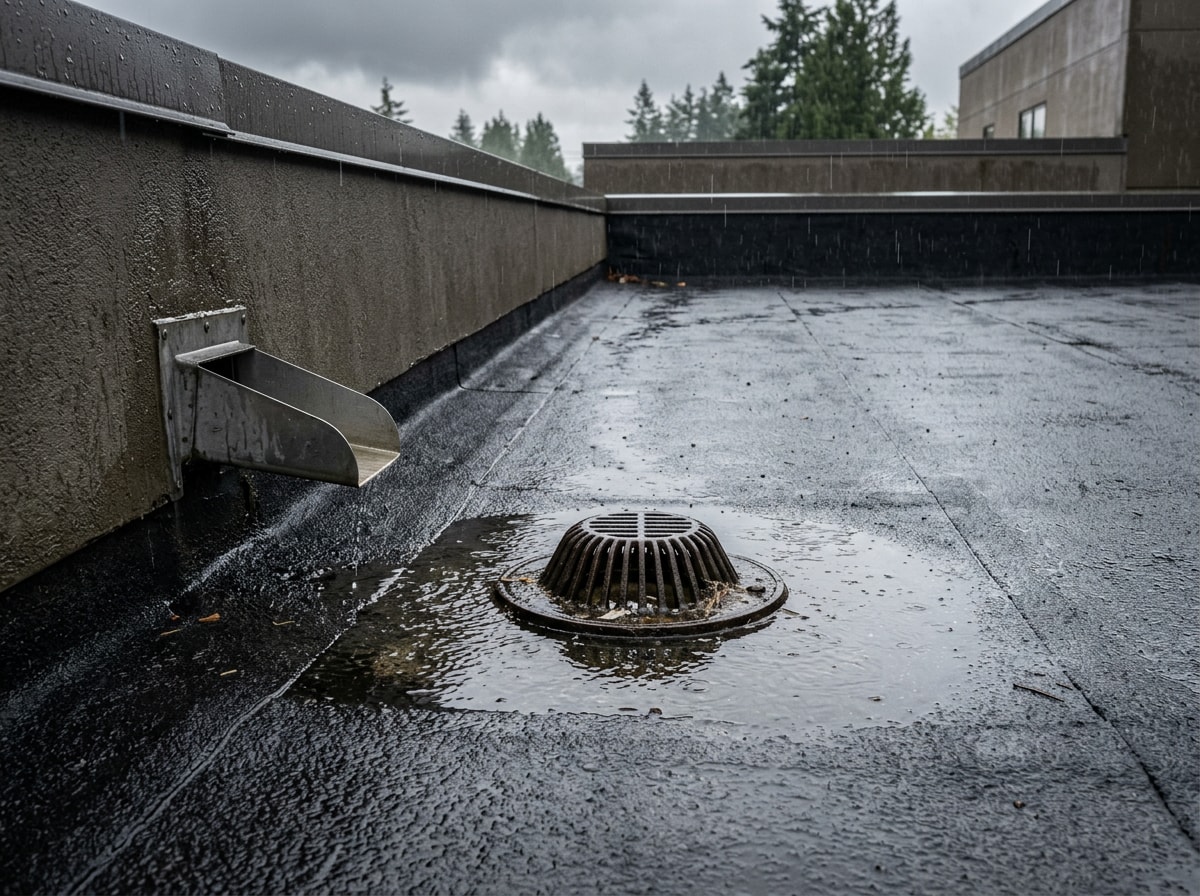
Preventing standing water starts with drainage design, not just material choice. Tapered insulation that creates a gentle slope toward drains, properly sized scuppers, and membrane seams rated for constant moisture exposure all work together to keep water moving off the roof instead of sitting on it. Long-term weather data compiled by NOAA's U.S. Climate Normals, which provide information about typical climate conditions for thousands of locations across the United States , confirm that lowland Skagit County regularly sees well over 30 inches of precipitation a year, which makes ponding-water prevention a genuine design priority rather than a nice-to-have.
Snow Load in the Foothills
Flat roofs in foothill areas need to be designed for structural load, not just water drainage, since wet snow is considerably heavier than the dry powder common farther inland. Minimum roof snow load requirements are set out in Section 1608.2 of the International Building Code, which states that ground snow loads used to determine design snow loads for roofs shall be determined in accordance with the reliability-targeted ground snow load values in Chapter 7 of ASCE 7 . Most Washington jurisdictions adopt the IBC as their baseline, so builders near Sedro-Woolley and Concrete should confirm that a roof's structural capacity and drainage design both account for local snow load conditions before work begins.
Choosing the Right Contractor for a Flat Roof Project
The most reliable vetting criteria have nothing to do with marketing and everything to do with verifiable facts:
- Confirm active state licensing and bonding before any contract is signed.
- Ask specifically about experience with flat and low-slope systems, not just general roofing.
- Check whether manufacturer certifications are current for the membrane brand being proposed, since many warranties are only valid when installed by a certified crew following exact specifications.
- Request references from recent low-slope projects, not just general remodeling work.
Washington State's Verify tool lets you see if a business you want to work with has an active contractor registration, and an active and paid-to-date workers' comp account covering any employees . The L&I contractor verification system is free to use and worth five minutes before accepting any proposal.
For property owners anywhere in the county, from Anacortes to Concrete, the Skagit County service area page outlines the communities covered for flat roof and general construction work, and the homepage has an overview of every service offered. When you're ready to move forward, request a quote and we'll schedule an on-site evaluation.
FAQ
What factors affect flat roof costs in Skagit County?
Cost depends mainly on membrane type, roof size, deck condition, and insulation needs. Drainage complexity, the number of penetrations (vents, HVAC units, skylights), and whether tear-off reveals deck damage all add to the total before a final number is set.
What are the most common flat roofing materials used in Skagit County?
TPO, EPDM, and PVC dominate both new installation and replacement quotes in this region. Each handles frequent rain and occasional snow reasonably well, though they differ on cost, lifespan, and seam type.
How long does a flat roof last?
A well-installed, properly maintained flat roof typically lasts 20 to 30 years, with PVC and EPDM often landing at the higher end of that range. Lifespan depends heavily on membrane thickness, installation quality, and whether a maintenance program catches small issues early.
What is the best flat roof material for a rainy climate like Skagit County?
Single-ply synthetic membranes (PVC, TPO, and EPDM) are generally the most reliable choices because they resist constant moisture exposure without degrading quickly. The right pick for a specific project still depends on budget, roof size, and expected building use.
Is a flat roof or a pitched roof better for my property?
There's no universal answer. Flat roofs are often more practical and cost-effective for large commercial footprints or additions where height is limited, while pitched roofs tend to suit residential architecture better in snow-prone areas. A contractor can help weigh the specifics for a given property and local code requirements.
Do I need a permit for flat roof replacement in Skagit County?
Most flat roof replacements and new installations require a building permit, since the work involves structural deck inspection and sometimes changes to insulation or drainage. A contractor familiar with local jurisdictions can confirm permit requirements before work starts.