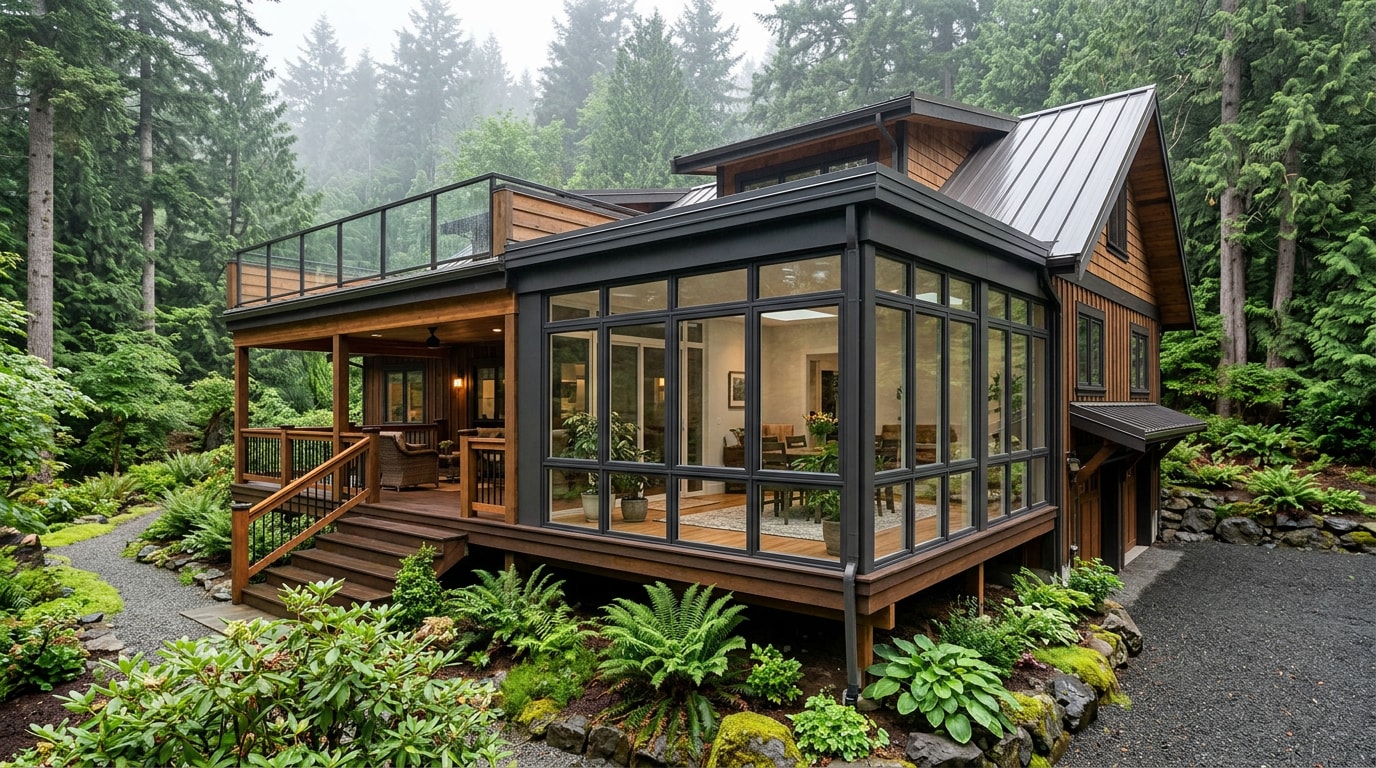
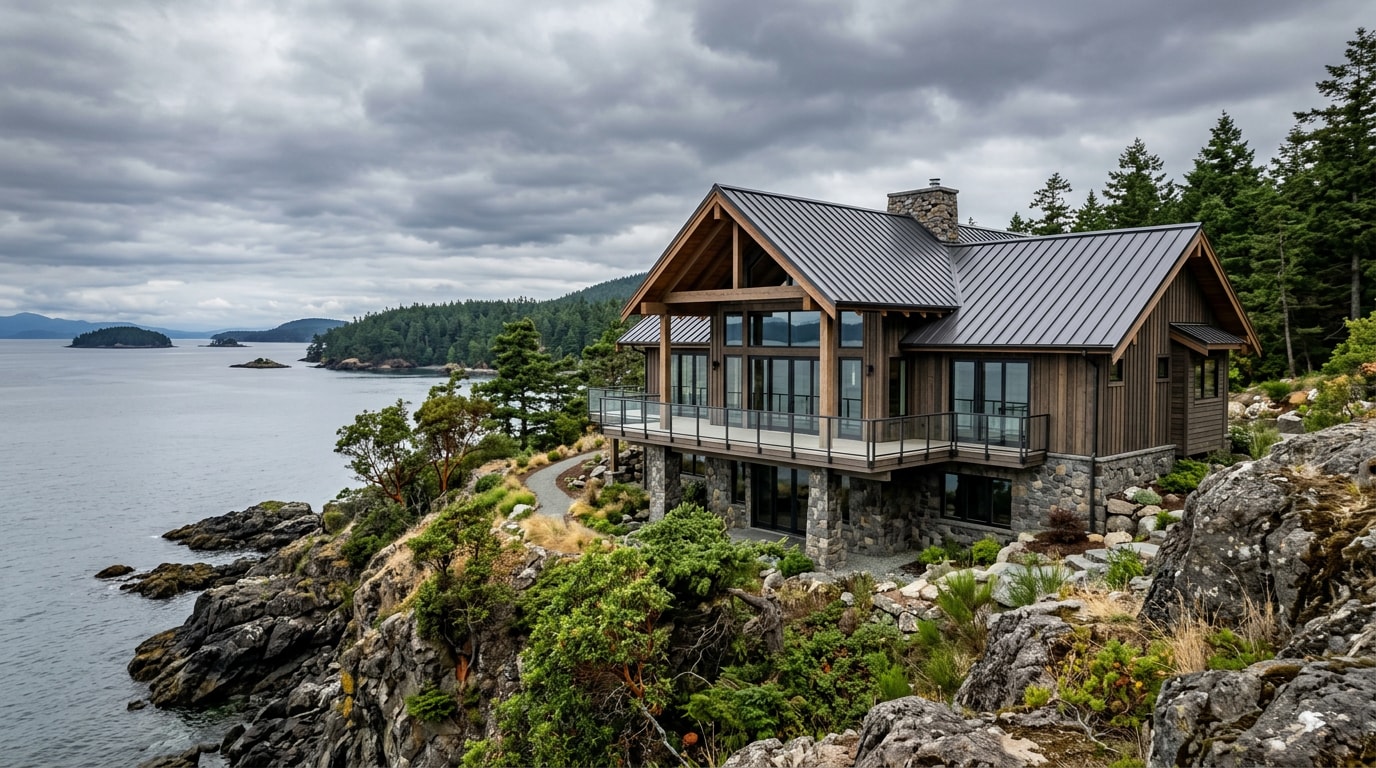
Finding home builders San Juan County, WA property owners can actually rely on means looking past a glossy portfolio and asking harder questions: who handles ferry-dependent material scheduling, who self-performs foundation work, and who has weathered a few island winters. This guide breaks down the terrain, logistics, costs, and permitting rules that separate island-ready builders from mainland crews taking on their first boat-access job. Read it before you sign a contract, not after.
What Makes San Juan County Home Building Different
Building on Orcas, Lopez, San Juan, or Shaw Island isn't mainland construction with a boat ride tacked on. Terrain, freight logistics, and climate each add a layer of planning a Skagit County or Bellingham project never faces.
Terrain shifts sharply across the county:
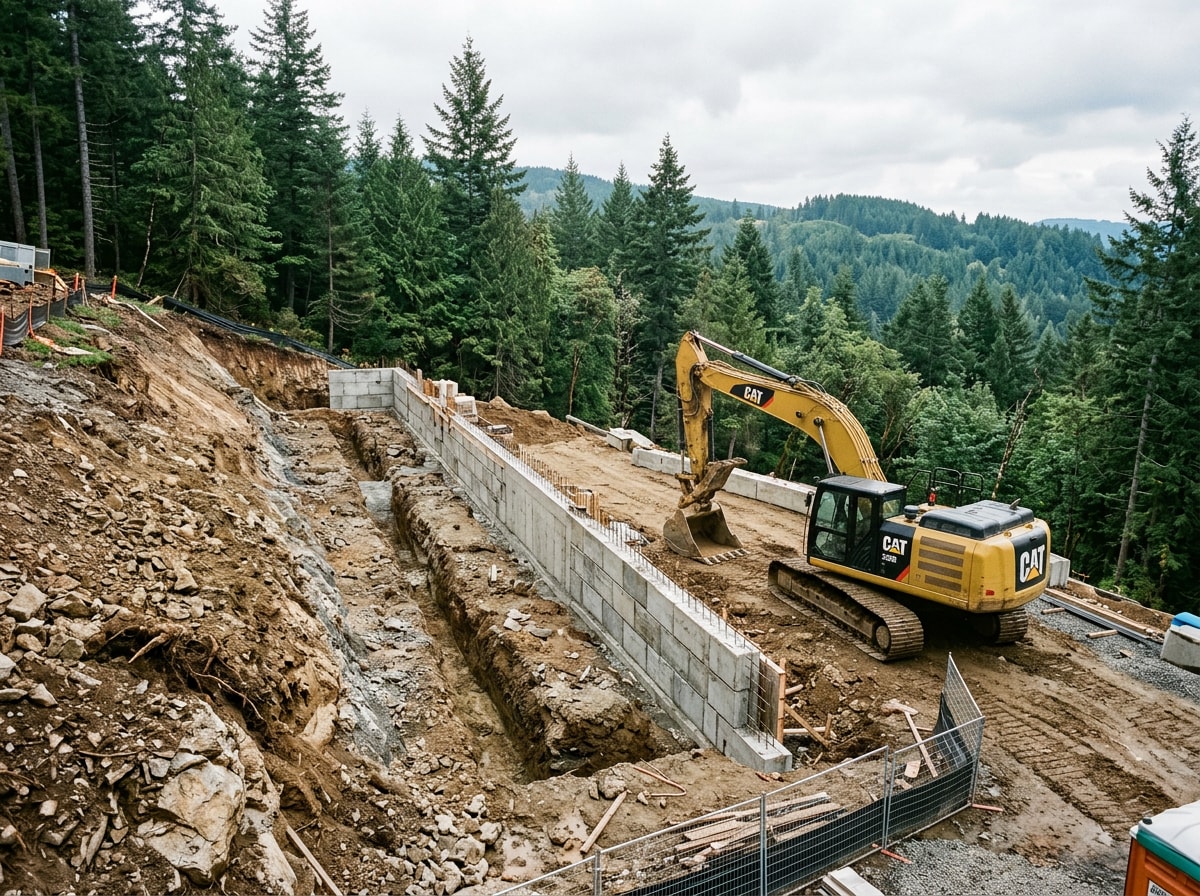
- Orcas Island leans toward steep, rocky slopes and dense forest cover, often requiring retaining walls and specialized excavation access.
- San Juan Island mixes rolling farmland with rocky shoreline bluffs, so soil conditions can change block to block.
- Lopez Island is comparatively flat, which simplifies foundation planning but doesn't remove the need for soil testing near the water.
- Shaw Island, with the smallest year-round population, usually needs extra lead time on both permitting and material scheduling.
A builder who already knows which island does what shows up to the first site walk with the right questions, not a generic checklist.
Ferry Logistics Shape the Build Schedule
Every framing package, septic tank, or cabinet delivery to the islands rides a Washington State Ferries vessel, and that reality drives the construction calendar more than most buyers expect.
The San Juan Islands route has historically struggled with reliability tied to crew availability, route scheduling, and vessel availability. Ferry service reliability and on-time performance have three main drivers: crew availability, route schedule, and vessel availability. For 2026, the county's off-peak schedule now runs from Sunday, Sept. 21 and goes through Saturday, June 13, 2026 , giving islanders a more predictable nine-month window. Current service levels put the route at 144 sailings a week, including five daily interisland trips on weekends and more weekday afternoon and evening departures from Anacortes , up from past winters with far fewer runs.
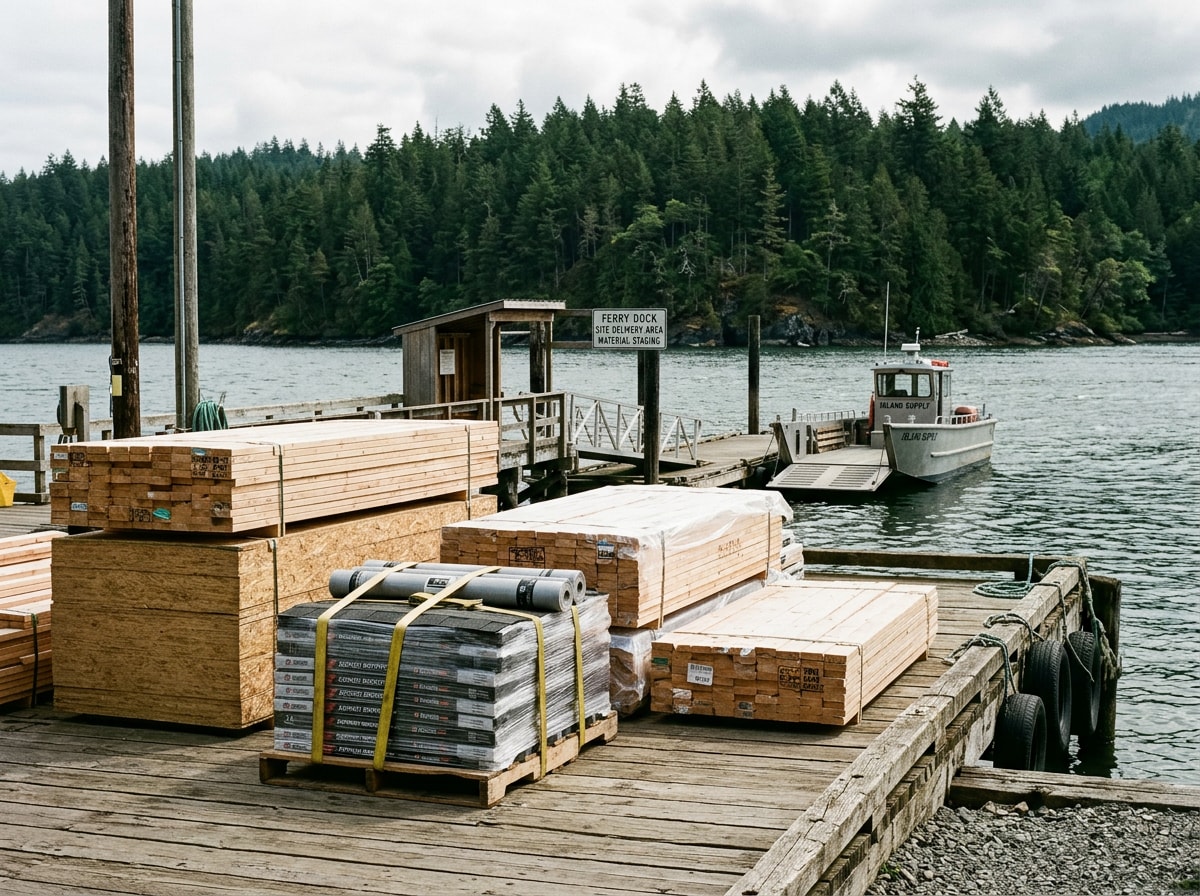
A missed sailing on a Shaw or Lopez project doesn't cost a day. It can cost a week, since boats to the outer islands don't run hourly. Crews who build here regularly order long-lead materials weeks ahead and stage deliveries at the dock specifically to avoid that slowdown.
Salt Air and Material Selection
Salt exposure is the other constant island condition. Standard fasteners, hinges, and uncoated steel brackets can begin rusting within a couple of seasons this close to saltwater. Stainless steel or hot-dip galvanized hardware, along with marine-rated exterior cladding, is standard practice on island builds, not an upgrade option.
Skipping those details doesn't show up on day one. It shows up five to ten years later as visible corrosion and siding failure, long after a contractor without local experience has moved on to the next county.
Full-Service Capabilities Worth Confirming Before You Hire
A true full-service island builder covers more than framing. Ask any contractor you're vetting whether they handle each of the following directly, or whether they subcontract pieces out to crews unfamiliar with the ferry calendar:
- Custom home construction from site evaluation through finish-out
- Residential land development and lot preparation
- Site preparation and building site grading for sloped or waterfront lots
- Home additions for buyers who find a rebuild impractical given freight costs
- ADU construction for guest housing or rental income
- Concrete foundations engineered for island soil conditions
Sherman General Contracting LLC, licensed and based in Custer, Washington, self-performs the custom home builder and general contractor scopes listed above across its service counties rather than farming out core trades to unfamiliar crews.
Additions deserve a special mention on Lopez and San Juan Island, where ferry freight on a full rebuild can make expanding an existing structure the more cost-effective path, provided the contractor can match existing rooflines and finishes convincingly.
What Custom Home Construction Costs in San Juan County
National cost data gives a useful mainland baseline, even though island freight and labor logistics typically push island pricing above it. The average single-family home sales price in the 2024 NAHB Construction Cost Survey is $665,298, the highest average sales price in the survey's history. For custom, contractor-built homes specifically, the median price was $166 per square foot of floor space, up slightly from $162 in 2023.
| Construction Stage | NAHB National Average (2024) | Share of Build Cost | Island Consideration |
|---|---|---|---|
| Site Work |
$32,719
|
7.6%
| Equipment often requires barge or ferry transport to reach the lot |
|---|
| Foundations |
$44,748
|
10.5%
| Soil conditions vary sharply between islands; engineered foundations common |
|---|
| Framing |
$82,319
|
19.2%
| Framing packages must be scheduled around sailing capacity |
|---|
| Interior Finishes |
$103,391
|
24.1%
| Cabinetry and fixtures typically travel by ferry, adding lead time |
|---|
| Final Steps |
$27,710
|
6.5%
| Landscaping and driveway work often limited by seasonal access |
Treat this table as a mainland Washington starting point, then plan for island pricing to run above it once freight and site-specific logistics are factored in. Ask any builder quoting your project for a written, itemized estimate rather than a single lump-sum number, so you can see exactly where the island premium is being applied.
Permits You'll Need Before Breaking Ground
San Juan County's Department of Community Development oversees every residential build in the county. San Juan County's Department of Community Development is responsible for administering building permits and inspections, code enforcement, land use permits, long-range planning, and more.
Most new homes require a Standard Residential Building Permit. This is the most common permit type for a Single Family Residence built using the International Residential Building Code, covering a one- or two-family residence or an accessory structure up to 35 feet in height and three stories tall, with standard building and energy codes applying.
A few narrow exemptions exist for small, non-habitable structures. A one-story detached accessory building used for tool, wood, and other storage, miscellaneous small agricultural buildings, playhouses, or similar uses is exempt, provided it is not used for sleeping purposes or human habitation. But any home, addition, or habitable structure needs a full permit.
Shoreline and sensitive-area lots carry extra steps. If you build within 200 feet of the shoreline, in a designated Environmentally Sensitive Area, a flood plain, or in areas where there may be archaeological sites, you must contact the Community Development & Planning Department for approval prior to construction. Applications now run through the county's online SmartGov portal, where you can apply for, renew, and view the status of permits, as well as schedule inspections and make secure payments.
Why ICF Construction Comes Up So Often on Island Builds
Insulated Concrete Forms pair rigid foam insulation with a reinforced concrete core, and island builders bring them up constantly for wind-exposed, salt-air sites. The method isn't improvised. The Prescriptive Method for Insulating Concrete Forms in Residential Construction was developed as a guideline for one- and two-family residential dwellings that use ICF systems, providing a prescriptive method for the design, construction, and inspection of homes that take advantage of the technology.
For island homeowners, the practical draw is durability against the elements that wear down standard wood-frame walls faster here than on the mainland: wind load, moisture, and salt. The tradeoff is a higher upfront material cost, which many island owners offset over time through lower long-term maintenance.
Communities We Serve in San Juan County
Our crews work across the full island chain, including Friday Harbor, Roche Harbor, and the rest of San Juan Island; Eastsound and the broader Orcas Island community; Lopez Village and surrounding Lopez Island; and Shaw Island. Each community carries its own permitting quirks and ferry schedule, which is exactly why local experience matters more here than almost anywhere else in Washington.
If you're also planning project oversight, our construction lead guide for San Juan County breaks down what that role should cover for an island build specifically.
See our full San Juan County, WA service area page for current coverage and scheduling.
Who's Behind This Guide
This guide was prepared by Sherman General Contracting LLC, a licensed Washington construction contractor (license SHERMGC770C3) founded in 2023 and based in Custer, WA, serving Whatcom, Skagit, Snohomish, and San Juan counties. Owner Samuel Sherman and the Sherman GC team have handled island jobs ranging from storm-damage tree removal to full custom builds, and the ferry-staging and hardware guidance above reflects lessons learned directly from those projects, not secondhand research.
Questions about your specific lot or timeline? Contact us for a free written estimate, or start at our homepage to see the full range of services available across Northwest Washington.
FAQ
How much does it cost to build a custom home in San Juan County, WA?
Expect island pricing to run above the national custom-build benchmark of $166 per square foot , mainly due to ferry freight and island labor logistics. Land prep, permitting, well, and septic are typically quoted separately from the base construction estimate since those vary widely by lot and access.
Do I need a building permit to build a house in San Juan County?
Yes. Nearly all new residential structures require a Standard Residential Building permit, the most common permit type for a Single Family Residence built using the International Residential Building Code . A handful of narrow exemptions exist for small, non-habitable structures, but any home, addition, or habitable structure needs a permit.
How long does it take to build a custom home on a San Juan Island?
Longer than a comparable mainland project, mainly because ferry scheduling adds lead time to every material delivery rather than any single construction task taking longer. Builders who stage materials ahead of sailings and order long-lead items early keep timelines closer to mainland norms.
What are the advantages of building with Insulated Concrete Forms (ICF)?
ICF walls combine a reinforced concrete core with continuous rigid foam insulation, which holds up better against wind, moisture, and salt exposure than standard wood framing. The prescriptive method for ICF residential construction standardizes design and inspection, so the technique is well-documented, not experimental.
How do materials get delivered to San Juan County job sites?
Nearly everything travels by Washington State Ferries. With the route now running 144 sailings a week , experienced builders schedule deliveries around specific sailings and stage long-lead materials at the dock in advance to avoid a missed boat pushing the project back a full week.