Enclosed porches in Whatcom County, WA typically cost between $8 and $300+ per square foot, depending on whether you pick a basic screen system or a fully insulated four-season sunroom. The right choice comes down to how many months a year you actually want to use the space and how well it needs to hold up against Bellingham's wet, marine climate. Here's what actually drives the price, the permit, and the long-term payoff.
What Is a Porch Enclosure System?
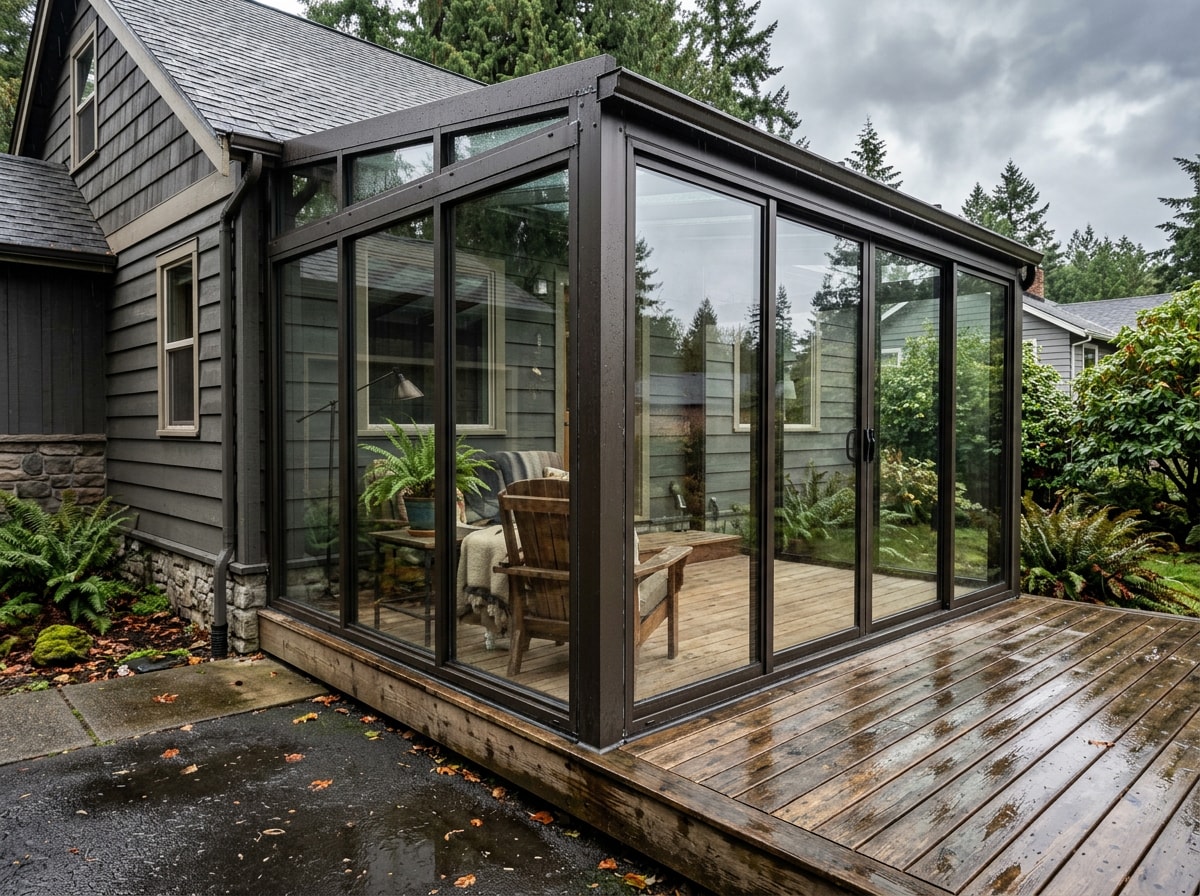
A porch enclosure system turns an open porch into usable space using framed panels of glass, screen, or a mix of both, attached to the existing roofline and deck.
Homeowners researching enclosed porches in Whatcom County, WA are usually weighing two paths. One is a lighter-duty panelized aluminum-and-screen or glass system. The other is a full sunroom-style conversion with insulation and permanent glazing.
In Bellingham and the surrounding towns, the appeal is practical. An enclosure stretches the porch season through the region's long wet spring and early fall, keeps bugs out during the brief dry summer stretch, and adds square footage without the cost of a full home addition.
Types of Enclosed Porches and What They Cost in Whatcom County
Most enclosure projects fall into one of three categories, and the type you pick affects your budget more than almost any other decision.
Screened Porch
A screened porch is the least expensive way to enclose outdoor living space, typically running $8 to $24 per square foot. It uses lightweight framing with mesh screen panels instead of glass, keeping out insects and debris while leaving the space open to outside air.
Cost stays low because there's no glazing, insulation, or climate control involved. That said, Whatcom County's cool, wet fall and winter months make a screened porch far less usable for roughly half the year compared to drier climates. It's best suited for spring-through-early-fall use.
Three-Season Porch
A three-season porch swaps screens for single-pane or double-pane windows, usually sliding or fixed-glass, while skipping insulation and permanent heating. This gets you a weather-tight space for spring, summer, and fall without the full cost of a conditioned room.
Pricing generally falls between $20 and $40 per square foot, depending on window quality and framing material. It's a middle-ground option for homeowners who want more protection than a screen offers but don't need the porch usable in January.
Four-Season Sunroom
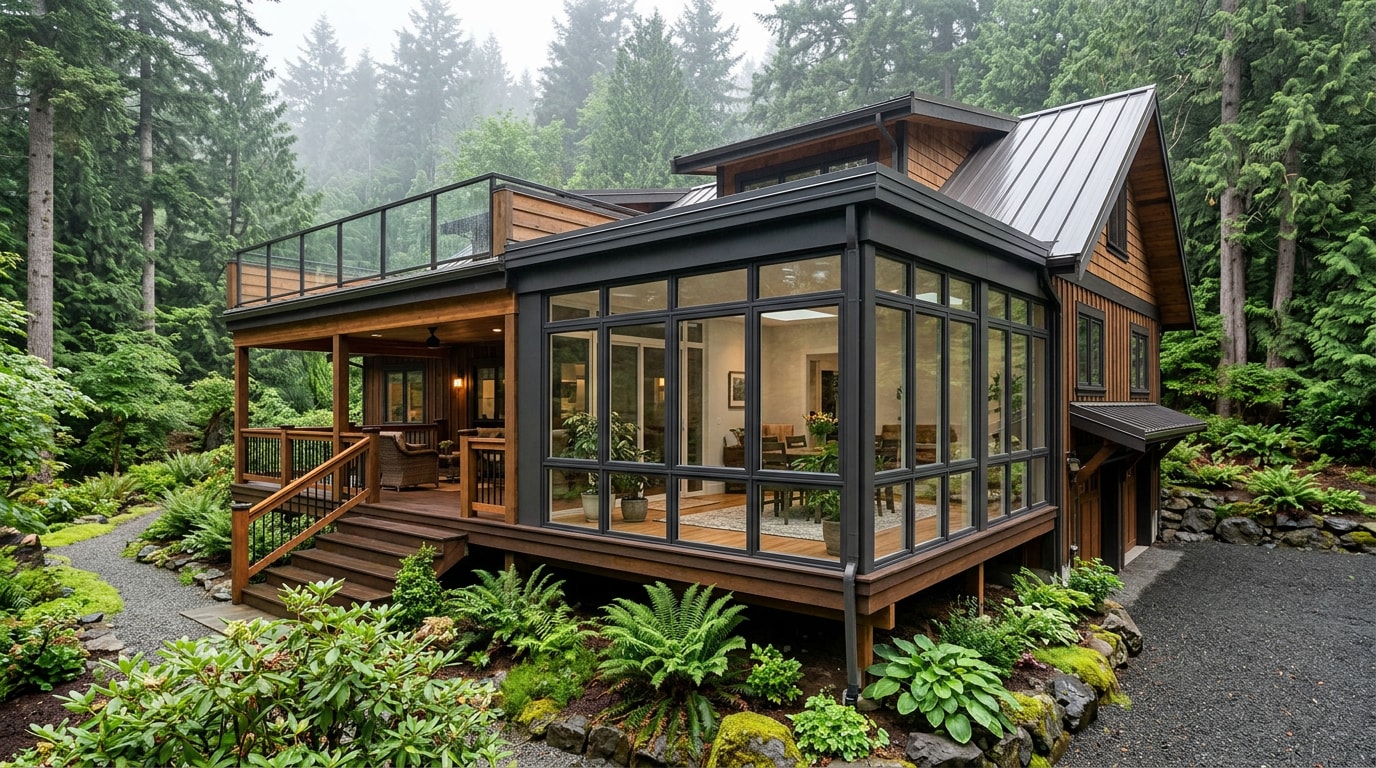
A four-season sunroom is fully insulated and glazed for year-round comfort, with heating and often cooling built in. It typically costs $100 to $300+ per square foot depending on finishes.
In Whatcom County specifically, glazing and insulation specs matter more than national cost guides usually assume. This region sits in a marine west coast climate with persistent damp conditions, real heating-degree days, and long stretches of overcast, low-sun-angle weather. Bellingham averages Mean Annual Precipitation: 36.1 inches a year, spread across far more rainy days than sunnier climates where many national pricing guides are written.
For a space to function as a genuine year-round room, double- or triple-pane glazing with a solid U-factor and properly insulated framing aren't optional upgrades. They're the baseline. ENERGY STAR window criteria are set by the U.S. Environmental Protection Agency based on properties that are independently verified according to procedures established by the National Fenestration Rating Council , which makes the ENERGY STAR window and glazing criteria a useful benchmark to compare before signing a contract.
Cost to Enclose a Porch by Size
Square footage is the next biggest cost driver after enclosure type. A larger footprint means more framing, more glass or screen panels, and more labor hours, so costs scale roughly in a straight line once you've picked your enclosure type.
| Porch Size | Screened Porch | Three-Season | Four-Season Sunroom |
|---|---|---|---|
| 100 sq ft | $800–$2,400 | $2,000–$4,000 | $10,000–$30,000 |
| 200 sq ft | $1,600–$4,800 | $4,000–$8,000 | $20,000–$60,000 |
| 250 sq ft | $2,000–$6,000 | $5,000–$10,000 | $25,000–$75,000 |
| 350 sq ft | $2,800–$8,400 | $7,000–$14,000 | $35,000–$105,000 |
These ranges reflect typical national price-per-square-foot data. Local material availability, contractor demand, and permitting can push Whatcom County projects toward the higher end of each band, especially for four-season builds.
What Drives the Final Price
Size and type set the baseline, but several other factors shift the final number up or down.
Labor and Materials
Framing material choice (wood, aluminum, or fiberglass) changes both material cost and long-term durability. Aluminum generally costs more upfront but needs less maintenance. Glass upgrades like tempered or low-E panes also add to material costs.
Labor typically makes up 40% to 60% of total project price, depending on how much structural work (new footings, roof tie-ins, electrical) is involved versus a straightforward panel installation.
Permits in Whatcom County
Most jurisdictions require a permit once an enclosure becomes conditioned living space, but a simple screened-in addition may not need one. Confirm before starting work.
In Whatcom County, residential building permits for porch enclosures go through the county's Planning & Development Services office. One detail many homeowners miss: PDS recommends that applicants review their requirements for Land Use before applying for a Building Permit, and types of applications unlikely to require Land Use review include proposals that do not impact the exterior footprint of an existing structure , such as enclosing an already-covered porch versus building a new one. That distinction can change your timeline by weeks.
Structurally, decks and walking surfaces over 30 inches above grade require building permits , which matters if your existing porch deck sits above that height and you're adding walls or a roof tie-in. A typical submittal also asks for a Site Plan, Building Plans, Structural Engineering and Calculations, and Washington State Energy Code Forms unless the structure is unheated , so four-season sunrooms carry more paperwork than a screen kit.
You can review current requirements through the Whatcom County Planning & Development Services office, or talk through your specific project with our team by visiting {{SITE_URL}}/contact.
Added Features
Beyond the core structure, several line items commonly push totals higher:
- Electrical service for lighting, outlets, or a ceiling fan
- Flooring upgrades from basic concrete or decking to tile, composite, or engineered wood
- Mini-split heating units for shoulder-season comfort
- Insulation upgrades for three-season rooms homeowners later decide to winterize
If your porch sits on an aging slab or needs a new footing before enclosure work starts, our concrete flatwork services cover that groundwork separately from the enclosure itself.
General Contractor vs. DIY
Most licensed contractors price enclosure projects either by square footage or by a day rate, which typically runs $300 to $600 per worker per day for skilled labor. Contractor estimates usually bundle permitting, structural work, and finish-out into one project price.
A DIY porch enclosure can save on labor, but it carries real risk for anything beyond a basic screen kit. Structural framing, roof load calculations, and proper flashing are easy to get wrong. Mistakes here lead to water intrusion or failed inspections.
For three-season and four-season projects especially, the code complexity and weatherproofing demands of Whatcom County's wet climate make it worth hiring a pro rather than risking a callback-prone DIY result. A porch enclosure is structurally similar to a small home addition, and the same framing and roof-tie-in rules apply.
Sunroom vs. Screened Porch
The two most-requested options sit at opposite ends of the budget and usability spectrum.
| Feature | Screened Porch | Four-Season Sunroom |
|---|---|---|
| Upfront cost | Lowest | Highest |
| Usable months/year | ~5 to 6 | 12 |
| Maintenance | Occasional screen repair | Glazing seals, insulation, HVAC |
| Resale impact | Minimal | Counts toward usable square footage in many appraisals |
| Best for | Casual summer hangout space | True extension of living area |
Which is better depends on how you'll actually use the space. A casual summer hangout spot favors the screened porch. A true extension of your living area favors the sunroom.
Materials That Hold Up to Pacific Northwest Weather
Framing material matters more here than in drier parts of the country. Extruded aluminum framing with a weather-resistant powder coat holds up to Bellingham's near-constant rain and the mild salt air drifting in from Puget Sound far better than untreated wood or standard vinyl, which can warp, swell, or develop mold over a few wet seasons.
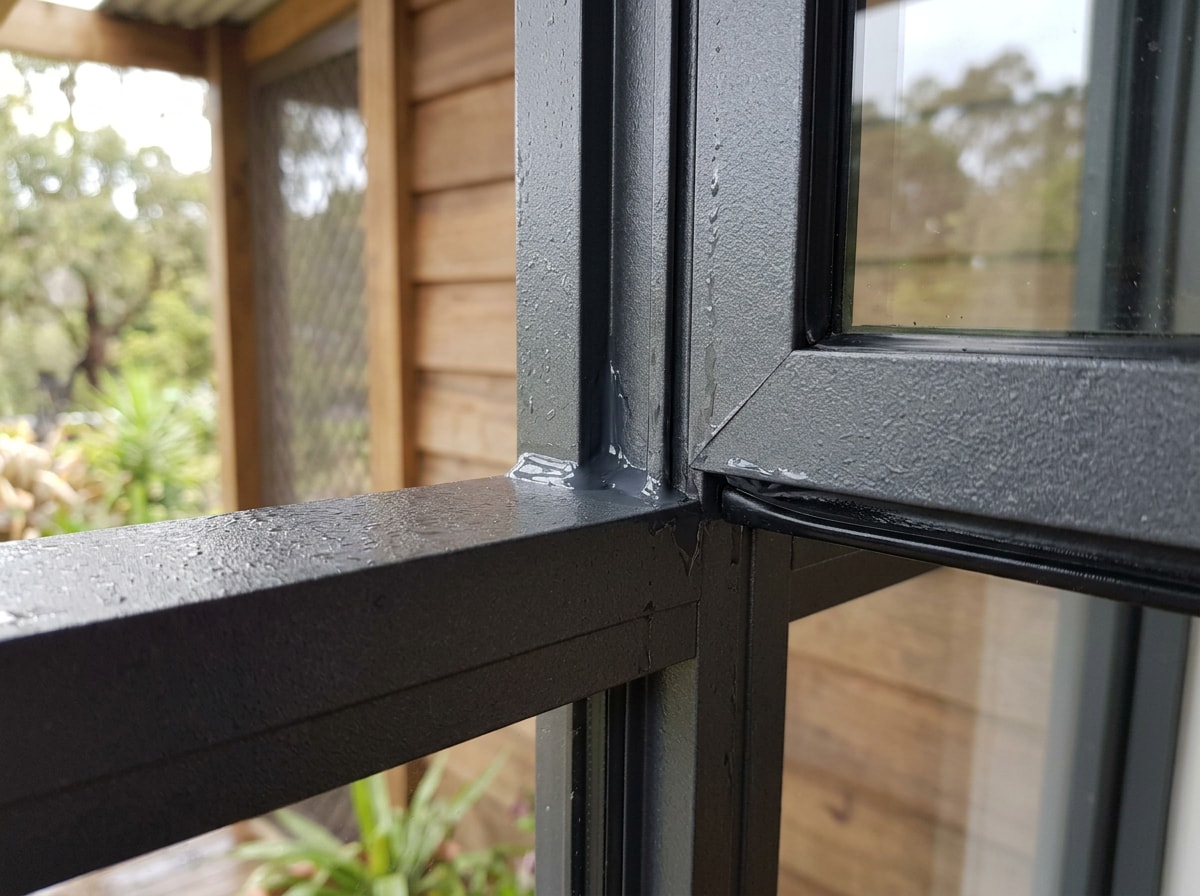
When a contractor claims their materials are rated for coastal or marine conditions, ask for the testing behind that claim. The architectural coatings industry tests this directly: salt-spray testing duration increases across the 2603, 2604, and 2605 coating standards from 1,500 hours to 3,000 hours to 4,000 hours, and outdoor weathering test duration also increases from one year to five years to ten years . You can see the current FGIA aluminum finishes standards for the specifics. That's a useful benchmark to ask about regardless of which contractor or brand you're evaluating.
Understanding these climate demands before choosing materials can prevent costly repairs five or ten years down the line, long after the original install warranty has expired.
Why Enclosed Porches Make Sense for Whatcom County Homes
An enclosed porch does more for Whatcom County homeowners than it might in a milder, drier market. It reclaims the shoulder seasons and the region's bug season for actual use instead of leaving the porch sitting empty half the year. For many households, that extra few months of usable space is the real return on investment.
On projects across Whatcom County, we've seen homeowners regret cutting corners on glazing to save a few dollars per square foot, only to end up with a sunroom that's too cold to use from November through February. Spending a little more upfront on double-pane glass and proper insulation usually pays for itself the first winter.
If you're planning a larger renovation alongside your porch, it's worth reading our guide on family room addition costs and permits in Skagit County, since the permitting process and structural considerations overlap closely with porch enclosures.
Whether you're in Bellingham proper or one of the surrounding communities, enclosure needs vary with lot orientation, existing roofline, and local permit rules. Browse our general contractor services or learn more about our work across the Whatcom County area. You can also visit our homepage to see our full range of services.
Ready to compare options for your property? Request a free estimate to get size- and type-specific numbers for your home.
About the Author
This guide was written by Samuel Sherman, owner of Sherman General Contracting LLC, a licensed Washington contractor (License #SHERMGC770C3) based in Custer, WA, serving Whatcom, Skagit, Snohomish, and San Juan counties since 2023. Sam and his crew have framed and finished porch enclosures across the county, from basic screen panel jobs in Lynden to full sunroom conversions in Bellingham. Questions about your project? Contact us directly.
FAQ
What is the cheapest way to enclose a porch?
A screened porch is the least expensive option, typically $8 to $24 per square foot. It uses simple framing and mesh screen panels instead of glass or insulation, keeping both material and labor costs low compared to three-season or four-season builds.
Do I need a permit to enclose a porch in Whatcom County?
It depends on scope. A basic screen enclosure that doesn't change your porch's exterior footprint often avoids a Land Use review, but adding glass, electrical, insulation, or converting the space into conditioned living area typically requires a building permit through Whatcom County Planning & Development Services. Decks and walking surfaces over 30 inches above grade also require a permit regardless of enclosure type.
Does an enclosed porch add value to my home?
Generally, yes. A well-built enclosed porch, especially a four-season sunroom, can add meaningful resale value since it increases usable living space. The return varies by build quality and region, but appraisers more often count insulated, permitted sunrooms toward square footage than simple screened additions.
How long does it take to enclose a porch?
Most screened or three-season porch projects take one to two weeks. Four-season sunroom conversions with electrical, insulation, and permitting typically take four to eight weeks, depending on permit processing times and the scope of structural work.
What's the difference between a three-season porch and a four-season sunroom?
A three-season porch has windows but skips insulation and permanent heating, so it's comfortable spring through fall. A four-season sunroom adds insulation and heating (often cooling too), making it usable year-round, including through Whatcom County's cold, wet winters.
Can I convert my existing covered porch instead of building new?
Often, yes. If your porch already has a roof and deck, converting it to a screened or glazed enclosure is usually cheaper and faster than building new, since the structural framework is already in place. You'll still need permits for any electrical, insulation, or glazing work added.