Commercial construction and renovation in Whatcom County, WA moves on a different clock than a typical home remodel. Permits, code upgrades, and tenant lease deadlines all compete for the same calendar, and the contractor you hire decides whether that calendar holds or slips. This guide breaks down the process, the real cost drivers, and the questions that separate a reliable build-out from a stalled one.
Why Commercial Construction in Whatcom County Takes Local Expertise
A local general contractor brings something an out-of-area firm usually can't match: working knowledge of Whatcom County's permitting offices, building officials, and the realities of building in a wet, marine-influenced climate where moisture management gets tested year-round.
Before hiring any commercial construction contractor, confirm they're licensed and insured in Washington State, and ask who your single point of contact will be for the life of the project. A contractor who phases work to limit downtime, keeps the job site secure, and communicates on a set schedule saves you more stress than one offering the lowest bid alone.
Our crews have handled tenant improvement build-outs in Bellingham's commercial corridors and Lynden's retail strips, scheduling plumbing and electrical rough-in around tenants' operating hours so businesses didn't lose a weekend of revenue. That kind of scheduling discipline is learned on local jobsites, not in a sales pitch.
Get a Free Estimate before your lease clock starts running.
Commercial Construction and Renovation Services We Provide
Commercial work in Whatcom County spans a wide range, from light cosmetic refreshes to ground-up construction. A capable team typically handles:
- Office and retail remodels
- Light-commercial build-outs and tenant improvements
- New commercial construction, including concrete foundation and site work
- Code compliance upgrades, including ADA accessibility
- Interior demolition ahead of a full build-out
Property types usually include offices, restaurants, retail stores, light manufacturing and industrial spaces, and institutional buildings, each with its own code requirements and occupancy rules.
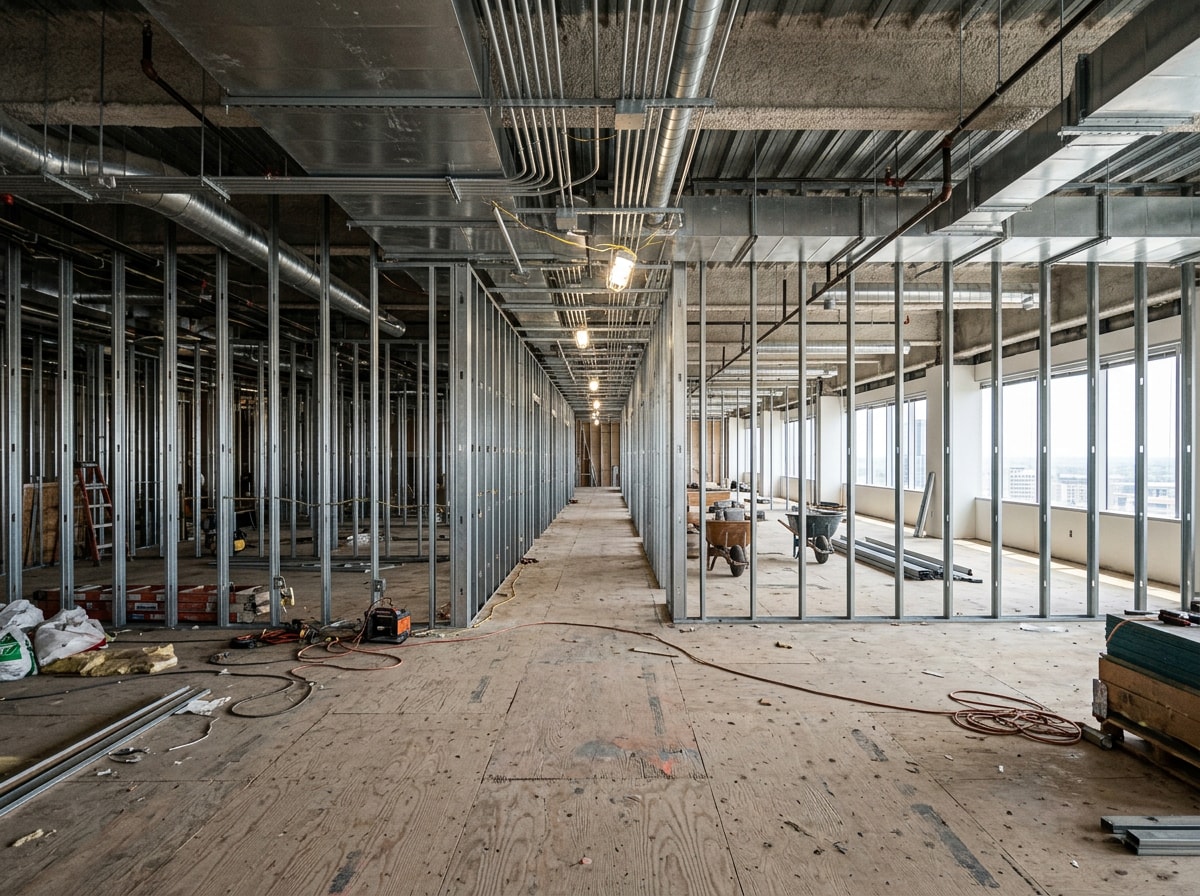
New ground-up commercial projects typically start with concrete foundation work, while tenant build-outs in existing buildings often begin with interior demolition to clear out the prior occupant's layout. Among all these project types, one comes up more than any other for local business owners: the tenant improvement, or TI.
Tenant Improvements (TI) in Whatcom County
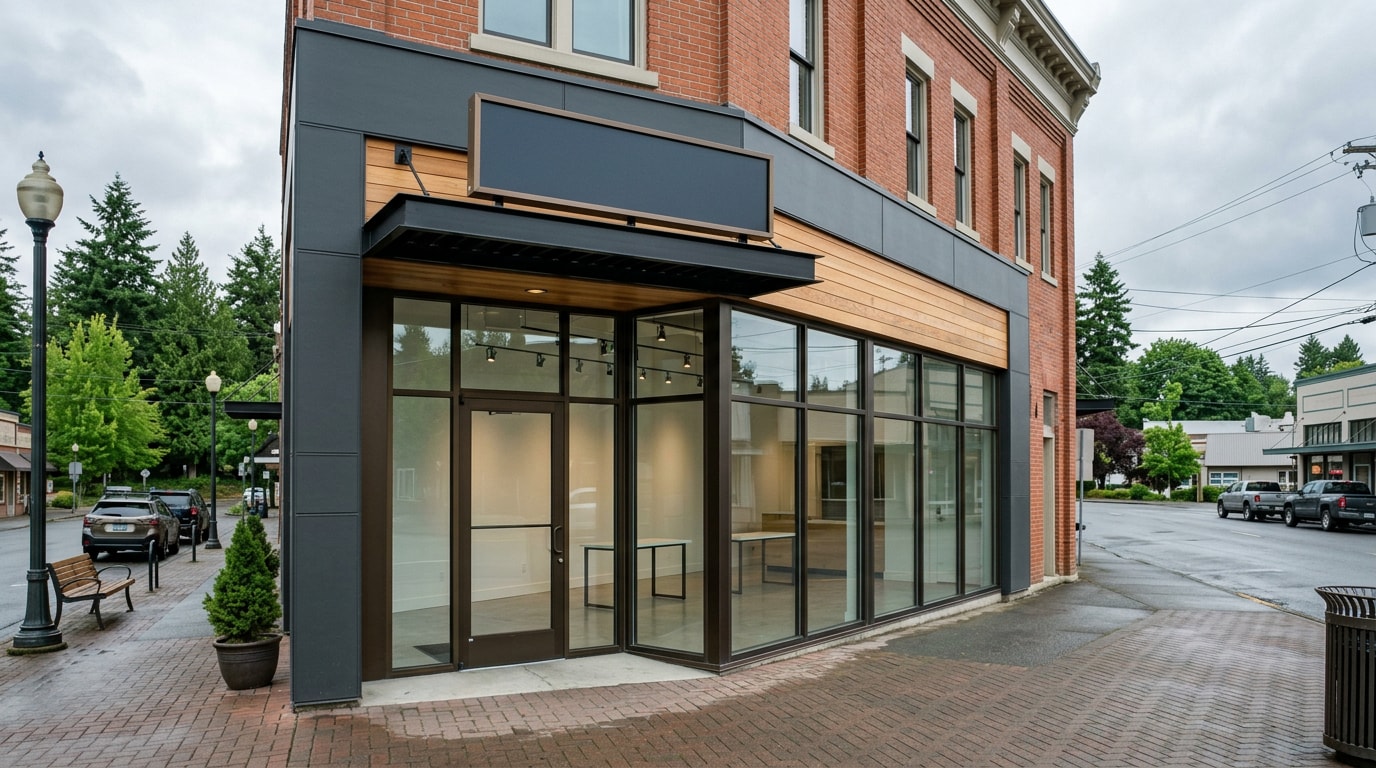
A tenant improvement is the renovation work done to customize a leased commercial space for a specific tenant's use. It's typically needed when a business signs a new lease, changes its occupancy type, or reconfigures an existing layout for a different operation. Scope and cost vary widely depending on what's involved.
| Project Type | Typical Scope | What Drives Cost |
|---|---|---|
| Office refresh | Paint, flooring, lighting, minor partitions | Finish quality, square footage |
| Mid-level build-out | New walls, electrical/data, HVAC adjustments | Layout complexity, permitting |
| Restaurant or medical TI | Plumbing, specialized equipment, life-safety systems | Code requirements, grease/medical gas systems |
Most TI work that touches walls, electrical, plumbing, or life-safety systems requires a commercial permit, even when purely cosmetic updates like paint and carpet typically don't. The City of Bellingham's own tenant improvement guidance spells this out directly: separate application and permits are required for electrical work , and mechanical or plumbing shown on submitted drawings triggers its own permit track.
One detail most contractor websites skip: a licensed architect is required when alterations or additions take place in a building that exceeds 4,000 square feet, unless exempted under RCW 18.08.410 . Below that threshold, a design professional isn't mandatory, though it's often still worth the cost on anything involving structural or life-safety changes.
For the full checklist of what's required before you submit, the county's Building Services Permit Center page links to the current application forms, and Whatcom County's own permit center portal walks through land use review ahead of a building permit application.
Real Permit Activity: What's Being Built in Whatcom County Right Now
Public permit records give a clearer read on local commercial activity than any marketing page. In February 2026, Whatcom County issued a commercial building permit for a new 10,000-square-foot pre-engineered metal building in Lynden, combining warehouse, retail, and employee work space on a single site. That same permit cycle included an alteration-TI permit on Lummi Island and an eligible facility request for telecom equipment upgrades, a reminder that "commercial construction" in this county covers everything from warehouse shells to small tenant fit-outs.
The takeaway for a business owner planning a project: permit volume here isn't limited to downtown Bellingham storefronts. Lynden, Ferndale, and unincorporated Whatcom County all see steady commercial permit activity, and the permitting process is the same regardless of city limits or county jurisdiction.
Why Take on a Commercial Renovation or Tenant Improvement Project?
Most commercial renovation projects start with one of two motivations.
Aesthetic. A dated storefront, lobby, or workspace no longer reflects the brand or feels welcoming to customers and employees.
Functional. A new tenant's business operates differently than the previous occupant's, requiring a new layout, added plumbing, or reconfigured traffic flow.
Either way, the benefits extend beyond appearance. A well-planned commercial space upgrade can improve efficiency, support higher lease rates, and reduce long-term maintenance costs tied to outdated systems.
Building Your Commercial Remodel Team
Before work starts, clarify who owns the improvements, since that affects who can depreciate them for tax purposes. Landlord versus tenant ownership of improvements is a conversation worth having early with your lease attorney, not after demo starts.
Once ownership is settled, consider whether to hire a design-build contractor who coordinates design and construction under one roof, versus hiring an architect and a builder separately. A unified general contractor team generally means fewer miscommunications, faster decision-making, and one party accountable for both the drawings and the final build.
If you're weighing the same decision for a project across county lines, our commercial renovation contractor hiring guide for Snohomish County covers the same vetting criteria and applies just as well here.
Commercial Construction Service Area Across Whatcom County
Commercial construction and renovation work in this region typically covers Bellingham, Ferndale, Lynden, Blaine, and the surrounding Whatcom County communities. A contractor familiar with the area understands how to coordinate around an existing tenant's business hours, especially for occupied-space renovations where the doors can't simply close for weeks.
Bellingham commercial projects, in particular, often require tighter scheduling given denser commercial corridors and limited parking during construction. Visit our homepage to see the full range of services we bring to a commercial project from site work through final finishes.
FAQ
What types of commercial construction projects do you handle?
A full-service commercial contractor typically handles tenant improvements, office and retail remodels, light-commercial build-outs, and ground-up construction for businesses across a range of industries and building types.
Do you handle commercial permits and code compliance in Whatcom County?
Yes. A qualified contractor manages the commercial permits Whatcom County and local cities require and builds to current commercial codes, including ADA accessibility compliance. Current federal accessibility standards are maintained by ADA.gov.
How long does a commercial tenant improvement project take?
Timelines vary by scope. Small cosmetic updates may take a few weeks, while larger tenant improvement projects involving structural, electrical, or plumbing work can run several months from design through final inspection.
How much should I budget for a commercial remodel in Whatcom County?
There's no single number. Commercial remodel budgets depend on scope, finishes, and permitting, and permit fees remain the client's responsibility regardless of contractor. The Associated General Contractors of America tracks national cost and labor benchmarks that can help frame expectations before you get a local bid.
Do I need an architect for a commercial tenant improvement in Whatcom County?
Only above a size threshold. Washington law requires a licensed architect or engineer when alterations or additions take place in a building over 4,000 square feet, unless exempted. Smaller projects can often skip this step, though it's worth discussing with your contractor if structural or life-safety work is involved.
Who pays for tenant improvements, the landlord or the tenant?
It depends on the lease. Many commercial leases include a tenant improvement allowance, a set dollar amount the landlord contributes toward build-out costs, with the tenant covering anything above that allowance. This should be negotiated and documented before construction starts, not after.
Ready to scope your project? Contact us for a free estimate on commercial construction and renovation anywhere in Whatcom County.